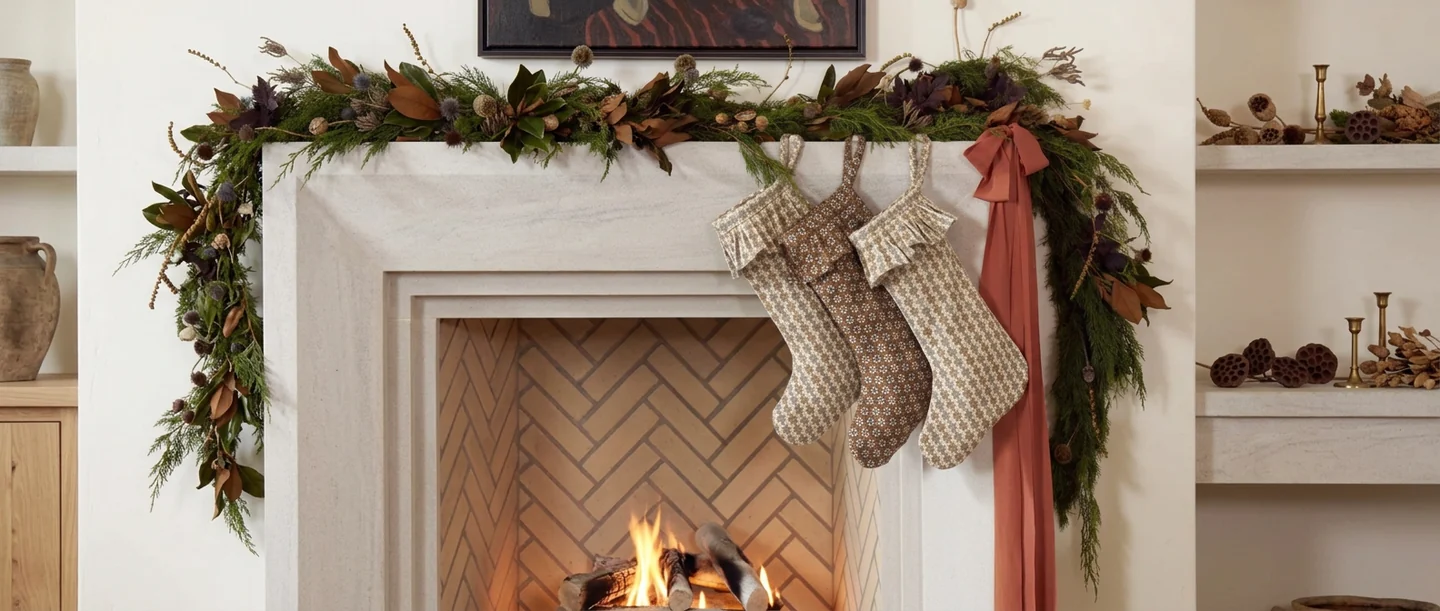
A Kiawah River Holiday: Nectar Fabric in the Southern Living Idea House
At the 2024 Southern Living Idea House, woven Nectar became part of the holiday story through custom stockings, tree skirts and a palette designed to settle naturally into the rooms around them.
There is something about holiday decorating that makes texture matter more.
Greenery, ribbon, candlelight and the familiar objects brought out each year all add another layer to a room. The textiles that sit among them can either compete with that abundance or quietly help hold it together.
At the Southern Living Idea House at Kiawah River, Nectar became part of that second category.
Its small woven repeat brought pattern to the holiday rooms without asking for too much attention, appearing in custom stockings and tree skirts in Raisin, Walnut and Cerulean Blue.
What I liked most was that the pieces still felt connected to the interiors once the holiday decorating was added. They were seasonal, but they did not feel temporary.
A Woven Pattern for the Holidays
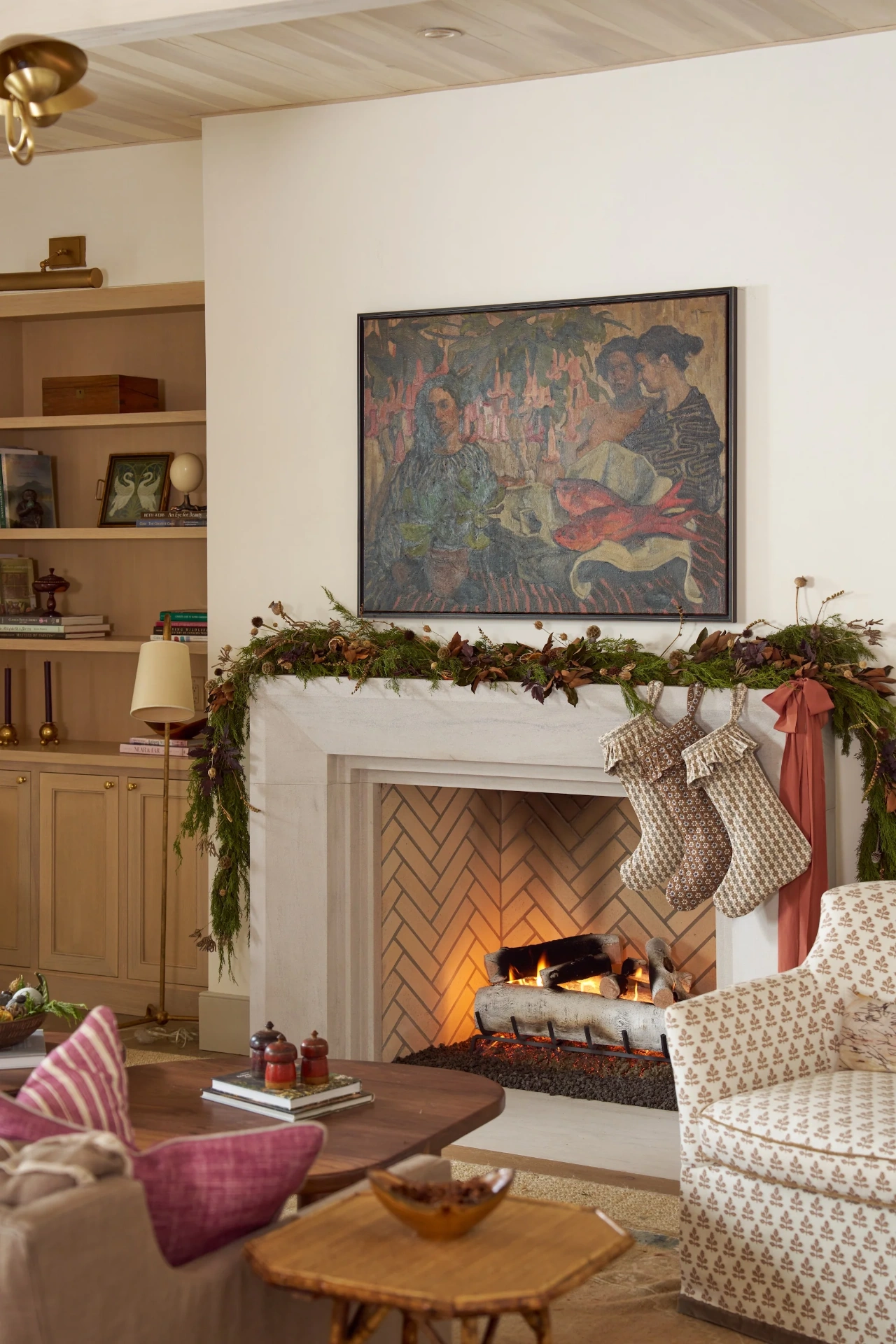
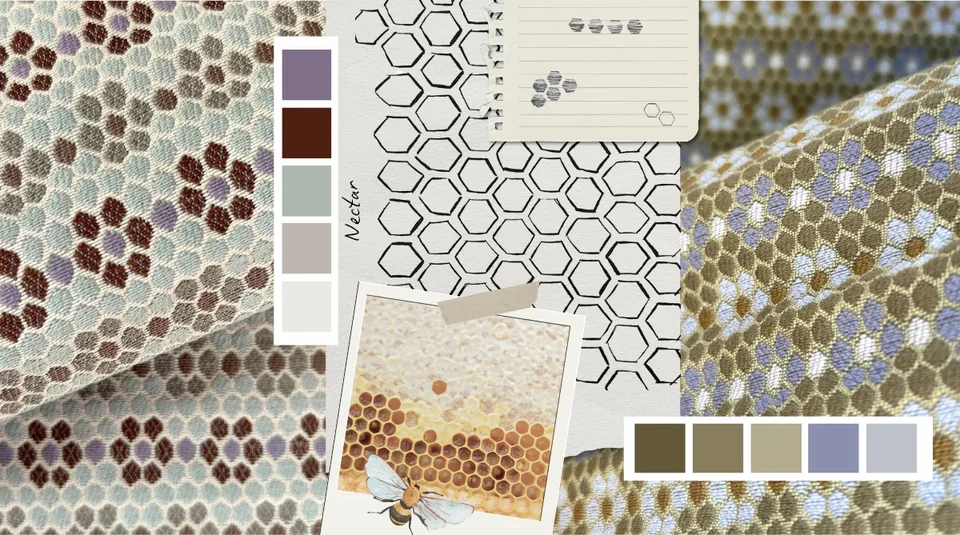
Nectar takes its structure from the honeycomb: a small geometric framework softened by floral detail.
Because the pattern is woven rather than printed, color and texture are built into the surface of the fabric. From across a room, it can read almost as a solid. Closer up, the repeat and individual yarn colors become more apparent.
That quieter scale is especially useful during the holidays.
There is already so much visual information in a room: branches, ornaments, ribbon, packages, collections gathered over time. A textile does not necessarily need to introduce another large statement.
Sometimes texture is enough.
Stockings in Raisin, Walnut and Cerulean Blue
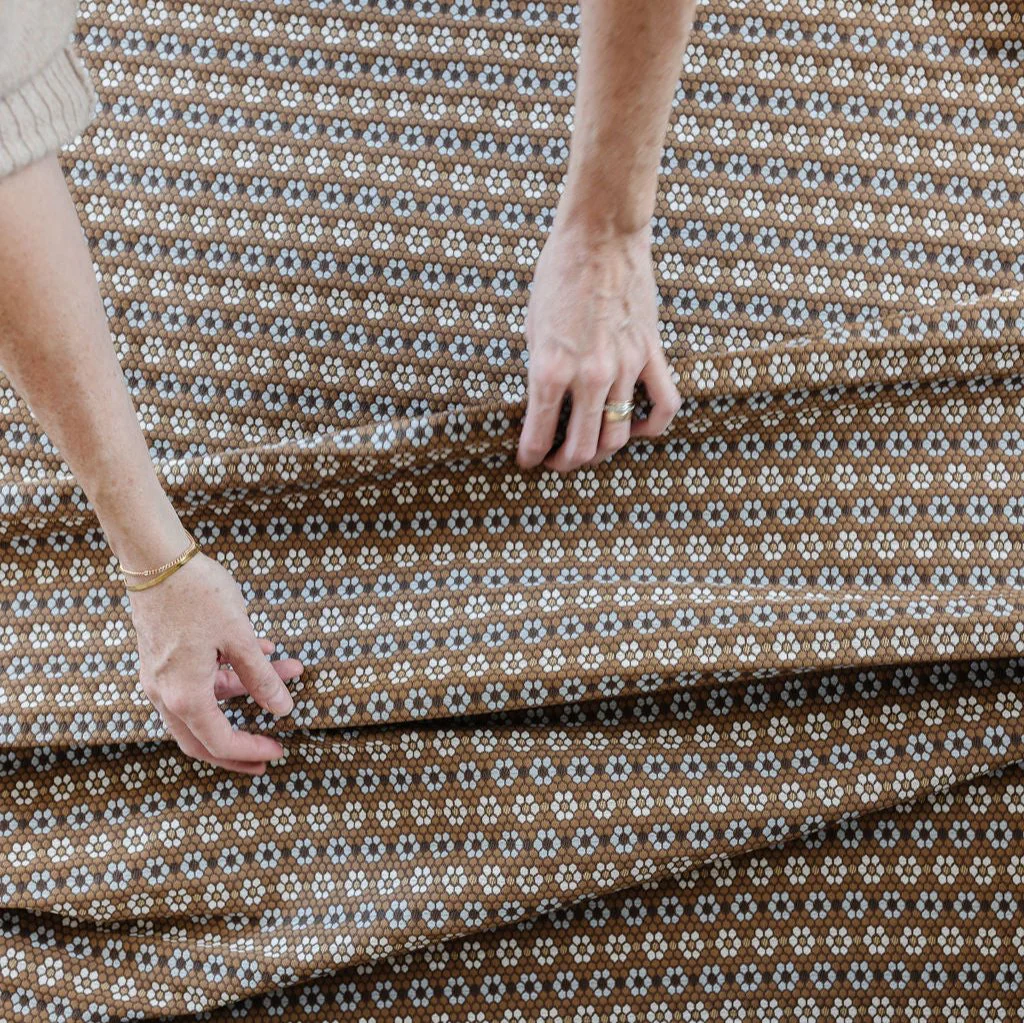
The custom stockings were made in three Nectar colorways: Raisin, Walnut and Cerulean Blue.
Together, they offered a holiday palette that moved beyond a conventional red and green.
Raisin brought depth. Walnut introduced an earthy neutral. Cerulean Blue gave the cooler rooms a clearer note of color.
The shared weave kept the three connected even though the colors were quite different.
That is one of the advantages of working within a single textile family. Color can change from room to room while the underlying pattern provides continuity.
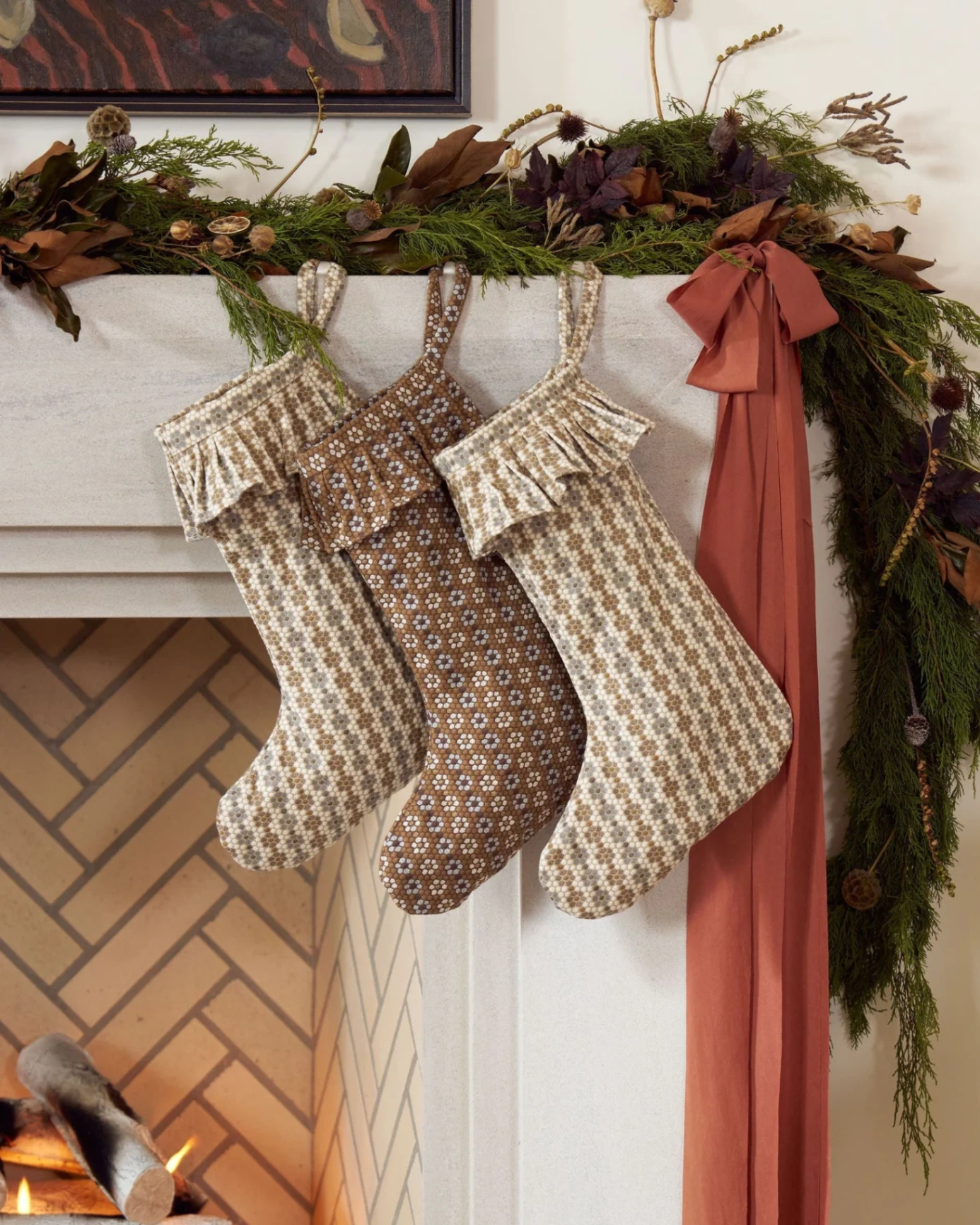
Nectar in Raisin
Raisin has enough depth to sit comfortably against cedar and darker greenery without disappearing into it.
Rather than reading as a traditional holiday red, its warmer, muted color gives the stocking a more collected quality.
Nectar in Walnut
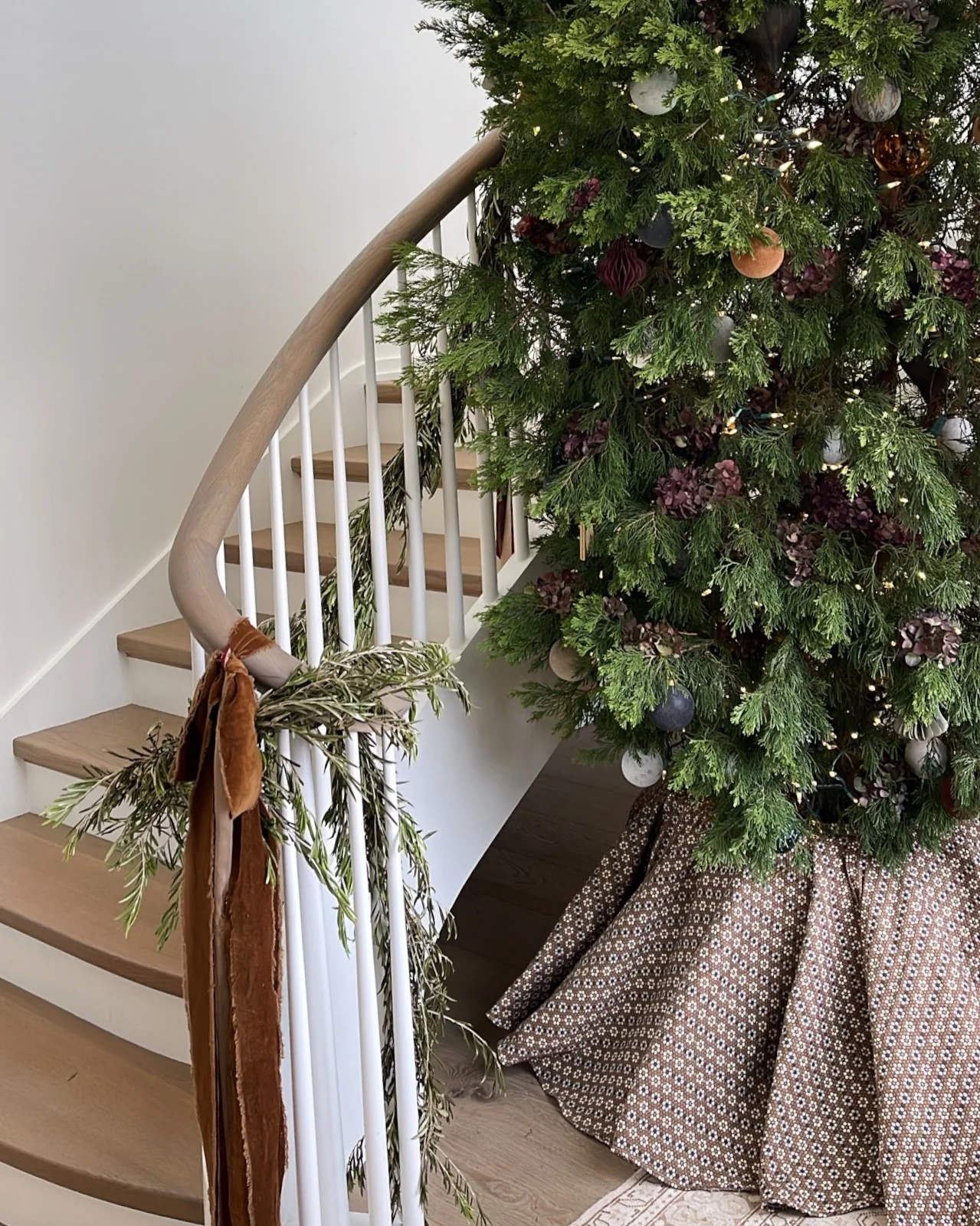
Walnut was used for the tree skirt beneath the main holiday tree.
The warm brown ground works particularly well with natural greenery and ribbon because it does not introduce another competing color. Instead, it gives the base of the tree a quieter visual weight.
A tree skirt covers a relatively large surface, so the small scale of Nectar becomes especially useful here. The repeat reads as texture first and pattern second.
Nectar in Cerulean Blue
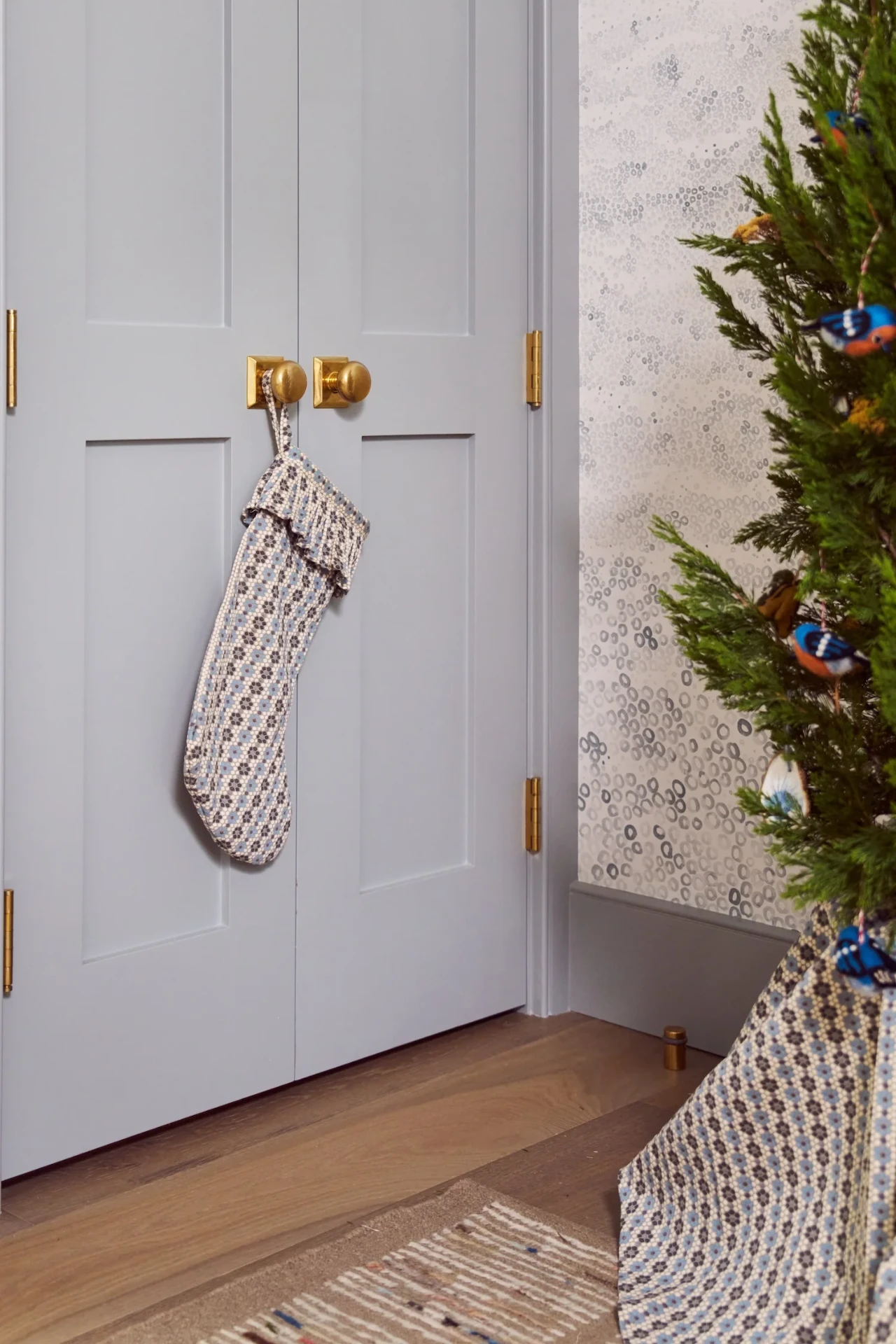
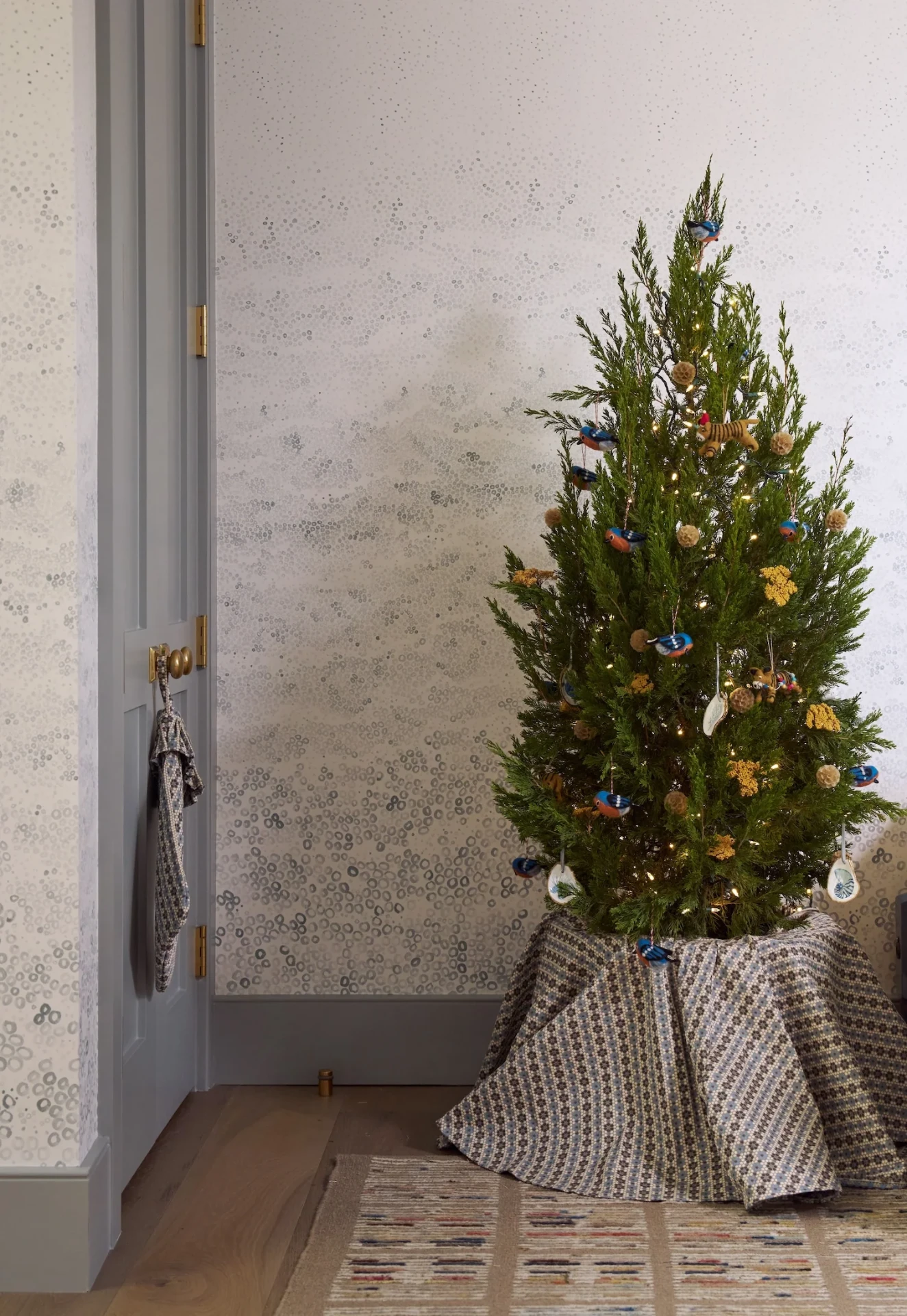
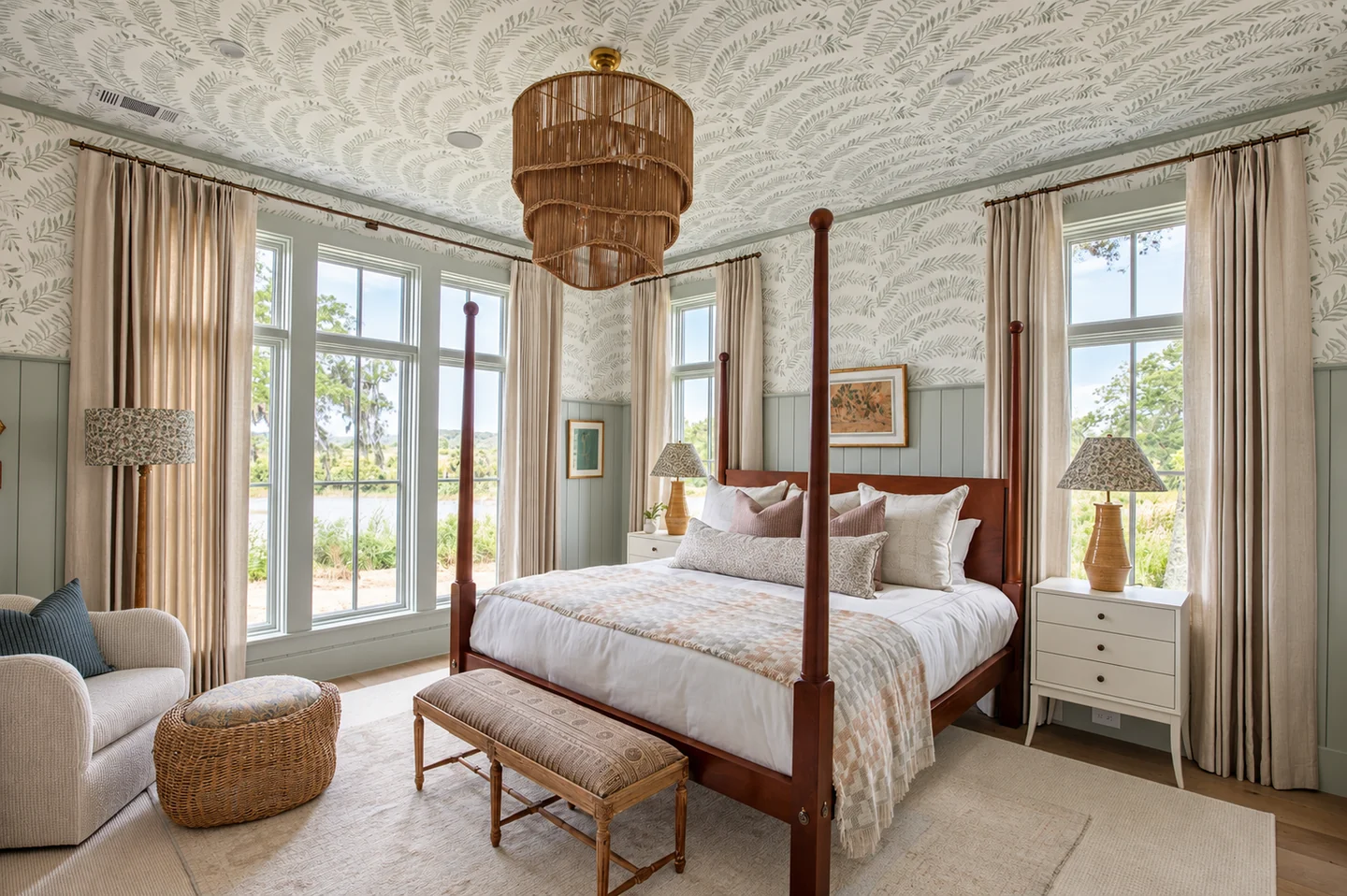
In the twin bedroom, Cerulean Blue offered a completely different interpretation of the same textile.
Used for a tree skirt and stocking, the cooler blue connected naturally to the existing room rather than forcing the room into a traditional holiday palette.
That is often the more interesting approach to seasonal decorating: begin with the room that is already there.
Holiday color does not always need to arrive from somewhere else.
Decorating the Room That Already Exists
The holiday installation throughout the Idea House was created with that same sensitivity to the interiors.
Willow Events layered greenery, florals and seasonal details into rooms that already had their own colors, patterns and materials.
The result is a useful reminder that holiday decorating does not have to replace the character of a room.
It can build on it.
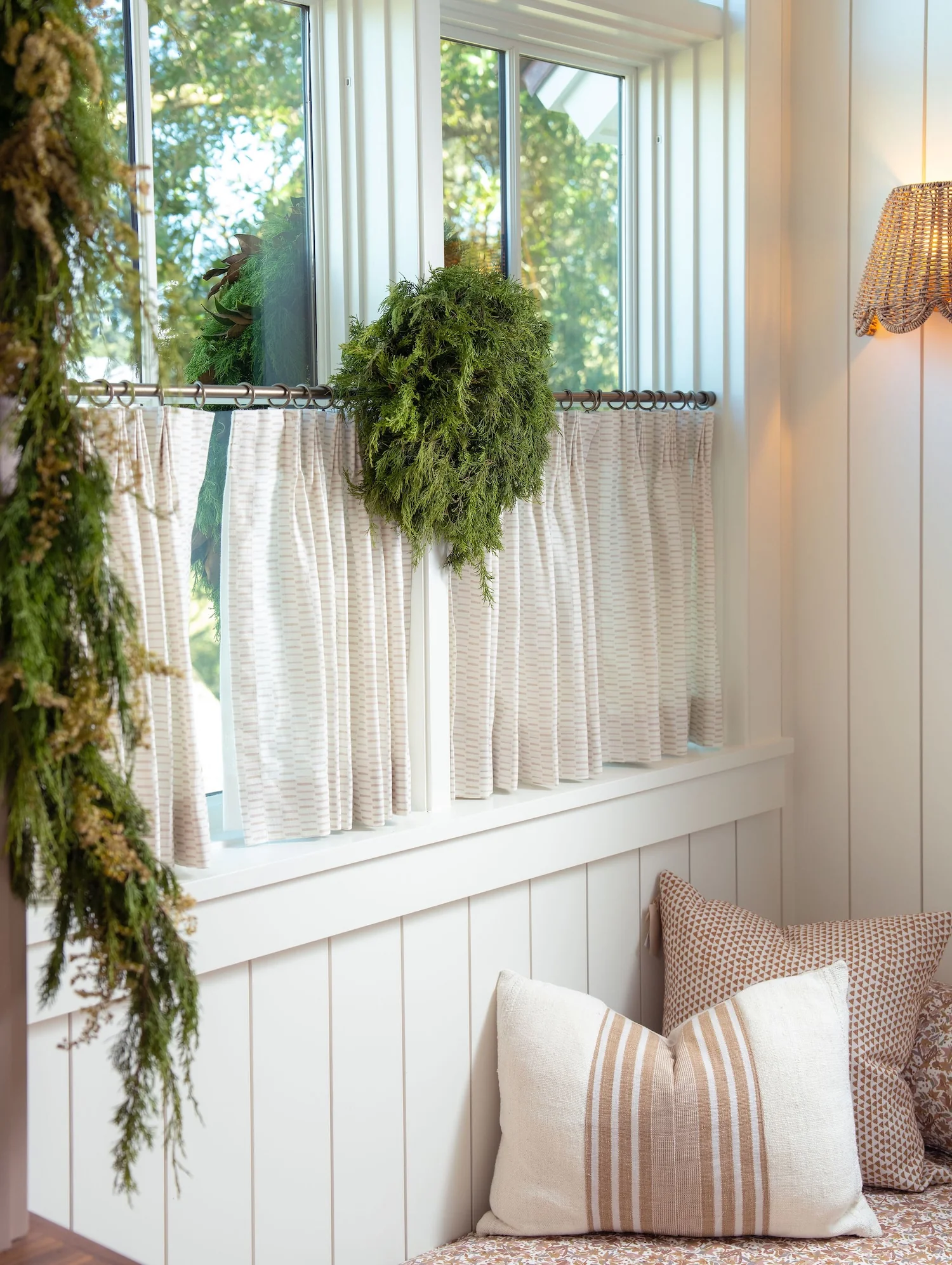
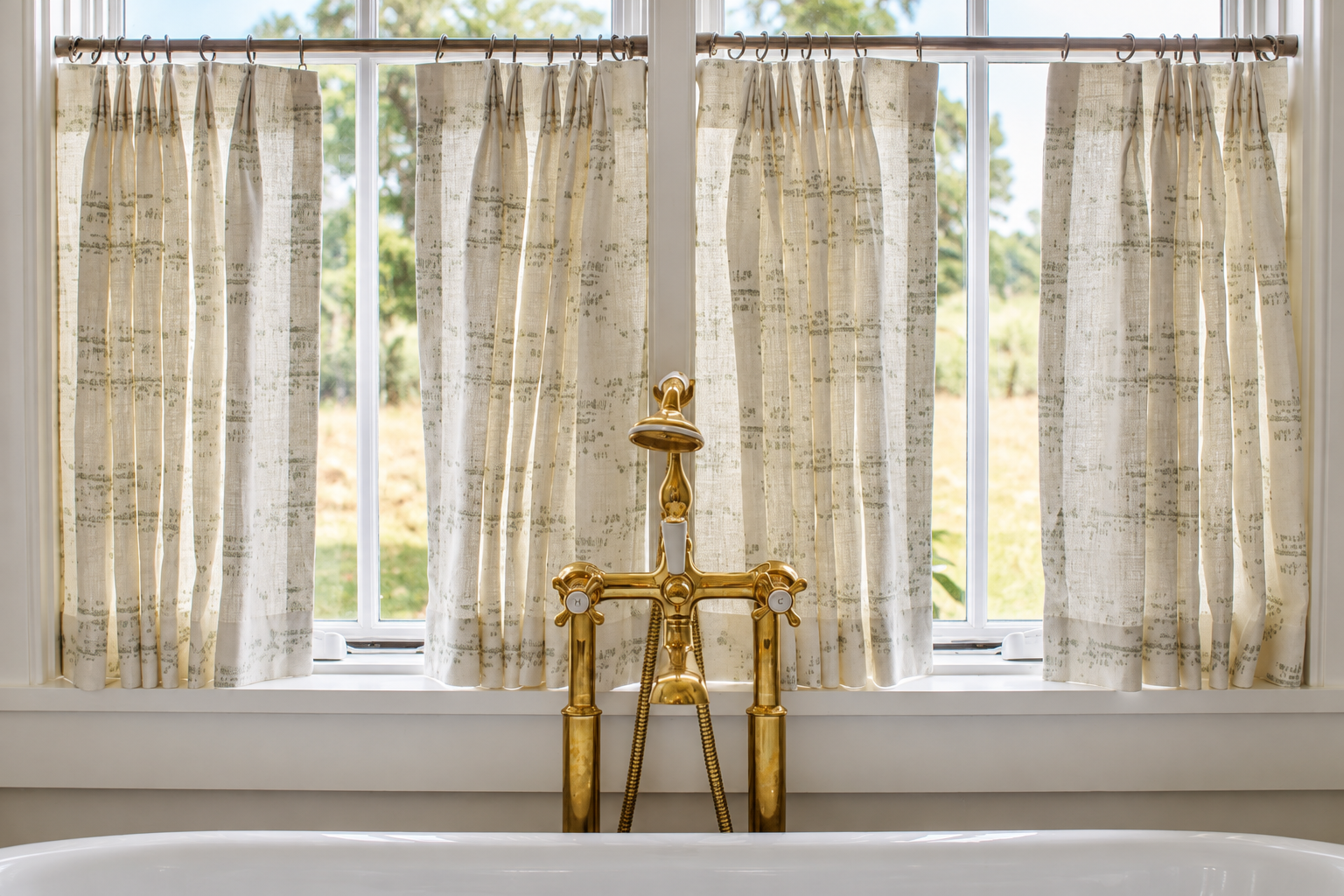
A patterned café curtain can remain part of the composition. Upholstery does not need to disappear beneath seasonal color. A blue bedroom can still feel festive without becoming red and green.
The strongest seasonal rooms often begin with what is already working.
Pattern Beneath the Season
Elsewhere in the house, the existing Emily Daws textiles remained visible beneath the holiday layer.
Eden in Autumn and Sweetgrass in Bloom continued to define the coffee vestibule. Hemlock in Frost brought its quiet vertical rhythm to the office. Harbor in Celadon remained a soft note at the laundry-room windows.
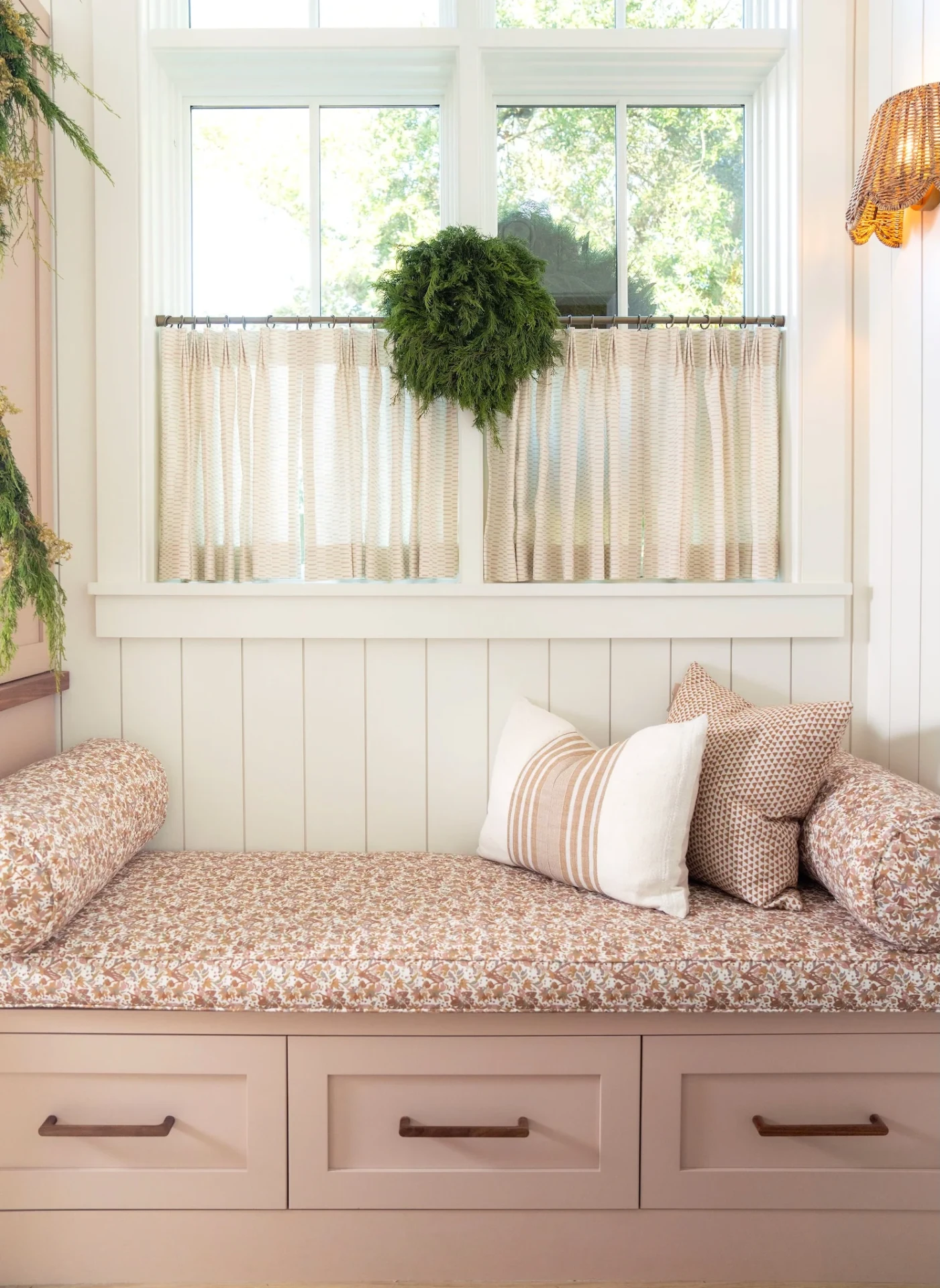
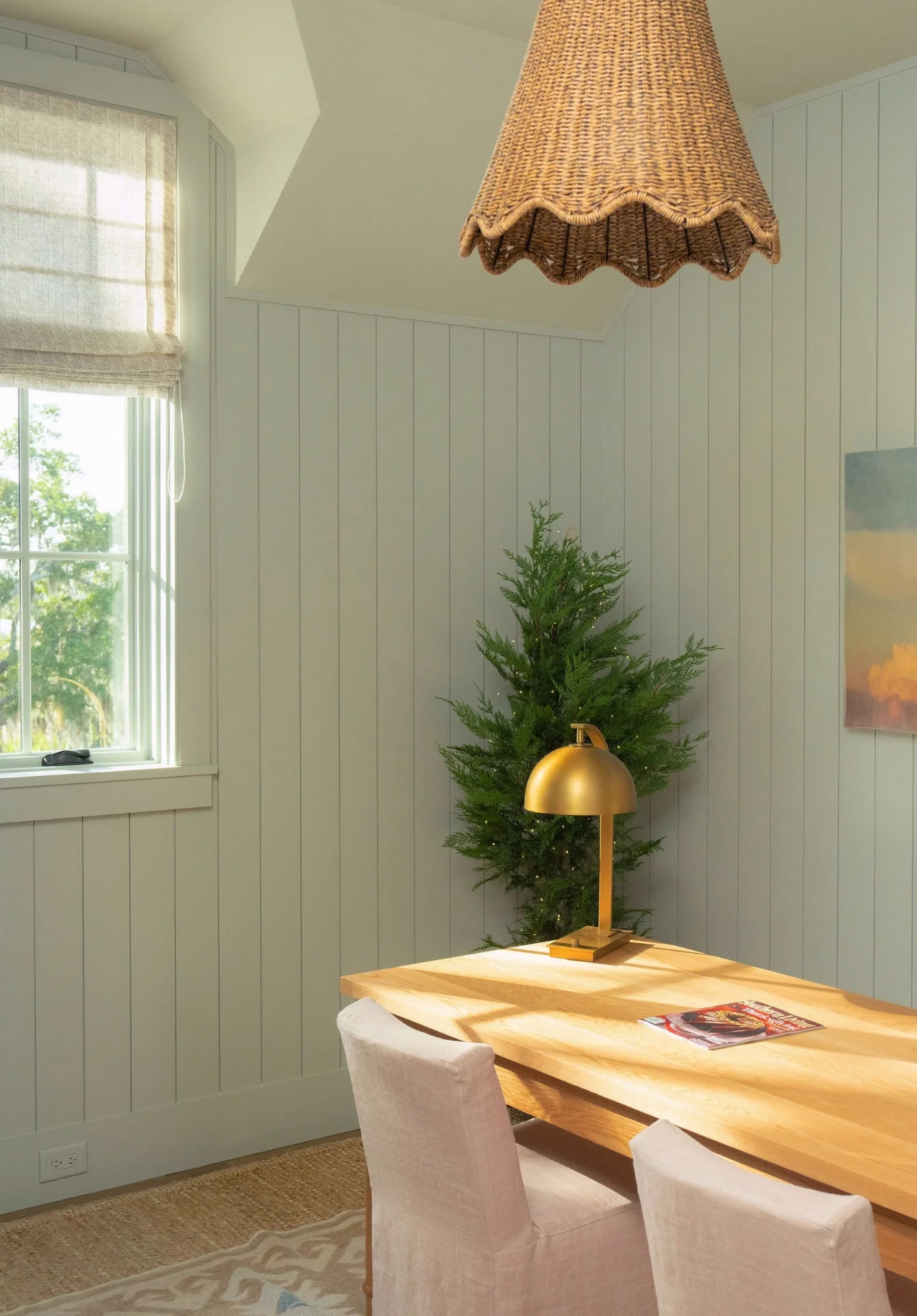
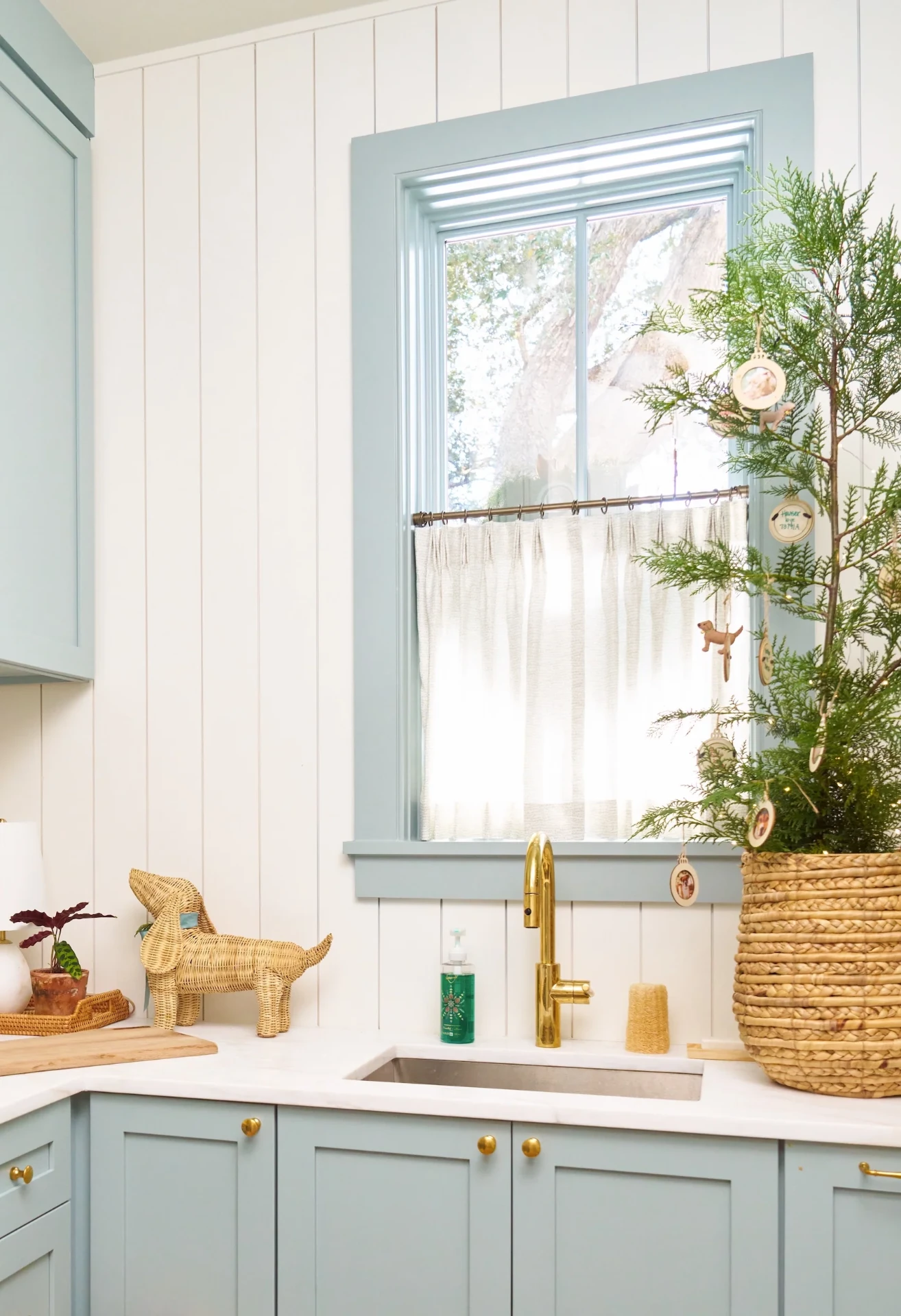
The holiday elements did not need to compete with those patterns.
Instead, natural greenery, ribbon and woven Nectar added another layer to the same palette.
That relationship between permanent and seasonal is what makes the house useful as holiday inspiration even now.
A Quieter Kind of Holiday Decorating
I tend to return to the same idea when thinking about seasonal interiors: the holiday pieces should still belong to the room.
A stocking can be made from a textile you would happily use on a pillow.
A tree skirt can pick up a color already present in the upholstery.
Greenery can introduce enough contrast without asking every other element to become more festive.
The result feels less like decorating over a room and more like adding another chapter to it.
At Kiawah River, Nectar happened to be one of those connecting threads.
And that may be what I like most about using textiles for the holidays. They make the season feel personal without requiring the rest of the room to change.
Featured in This Story
Explore Nectar, the woven Emily Daws pattern used for the custom stockings and tree skirts throughout the Southern Living Idea House holiday installation.

Order Swatches
Color is only part of what distinguishes a woven textile.
Order swatches to compare Nectar's weave, texture and colorways in person before specifying a project.
Project Team
- Interior Design
- Allison Elebash Interior Design
- Holiday Florals & Styling
- Willow Events
- Builder
- Dillard-Jones
- Architecture
- MHK Architecture
From The Common Thread
Charleston Collection
A Study in Lowcountry Pattern: The 2024 Southern Living Idea House
NECTAR
New Colors in Nectar: Sugar Plum & Savannah
Charleston Collection