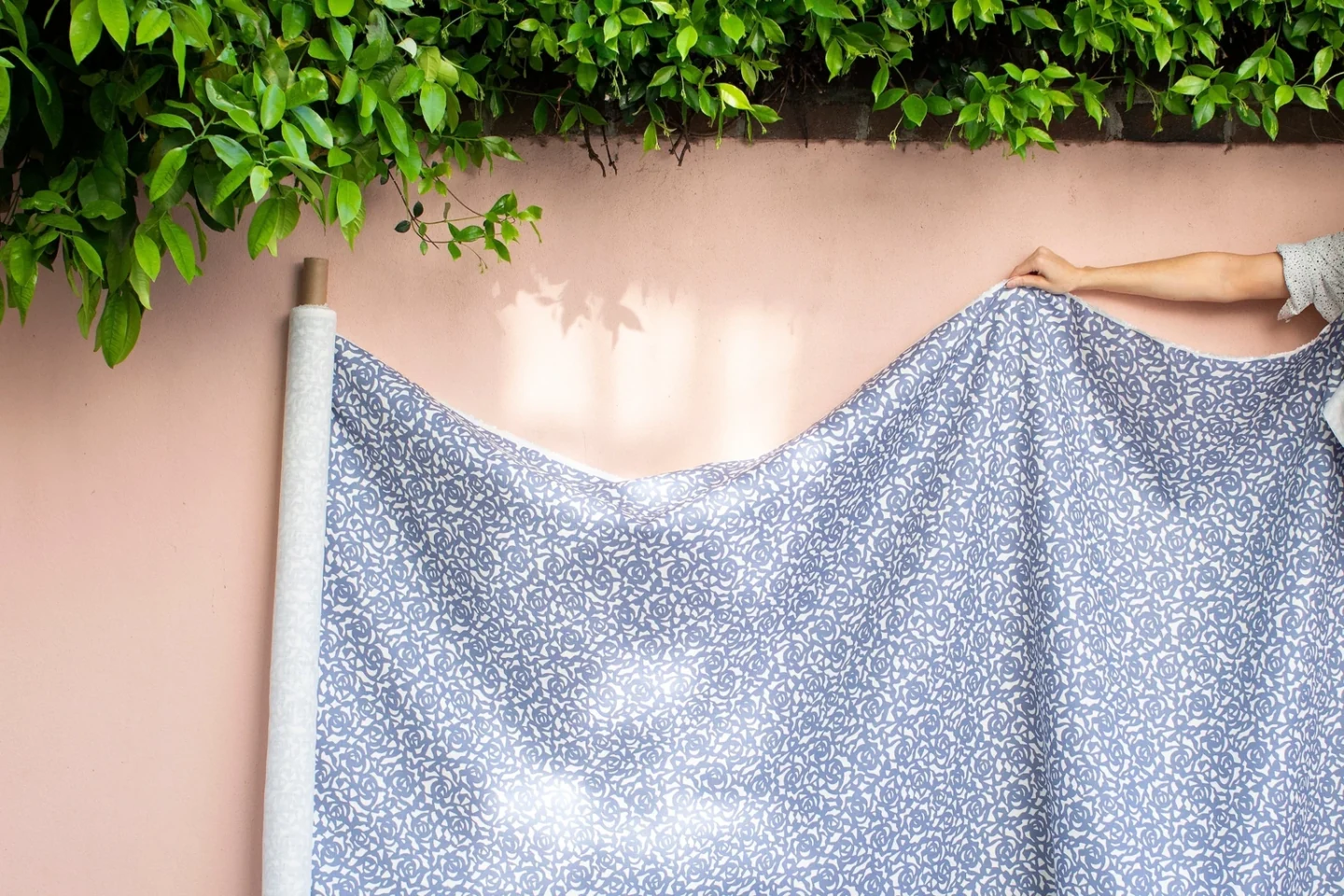
Carolina on My Mind: A Love Letter to the Lowcountry
The Charleston Collection was the beginning of Emily Daws textiles. A look back at the place, materials and familiar forms that shaped the first collection and continue to inform the work today.
When I moved from Virginia to Charleston nearly twenty years ago, I was still learning the visual language of the Lowcountry.
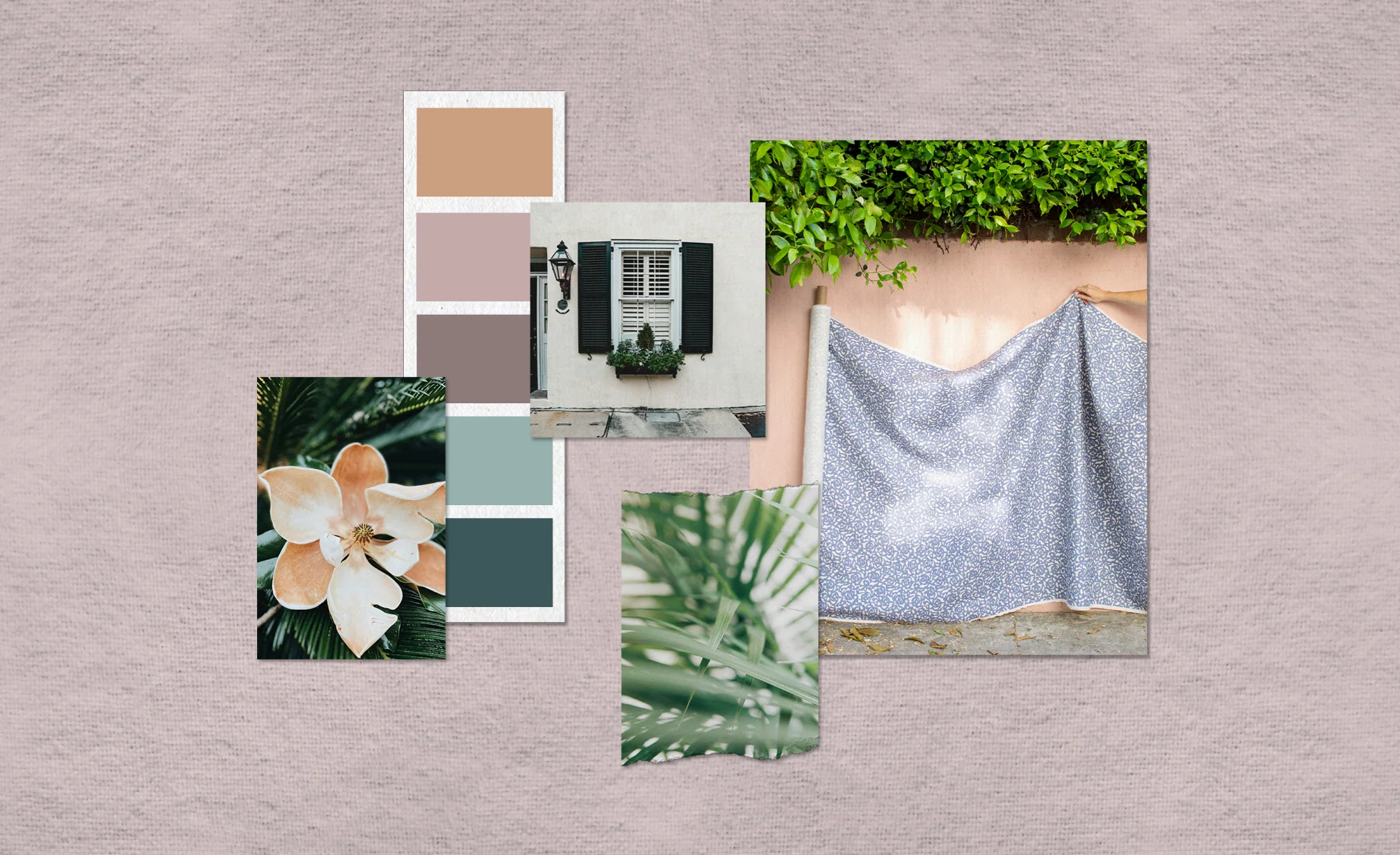
It was everywhere. Palmetto fronds against old stucco. The irregular rhythm of brick and cobblestone streets. Gardenias and magnolias that seemed almost architectural in scale. Marsh grasses, woven baskets and the soft, shifting colors of the coast.
Over time, those details began finding their way into my work.
The Charleston Collection, released to the trade in 2018, became my first collection of textiles and wallcoverings. Looking back, it also established something I continue to return to as a designer: beginning with something recognizable, then editing it until it becomes pattern.
Not a literal interpretation of Charleston, but an impression of it.
Palmetto
The palmetto is nearly impossible to separate from the landscape here.
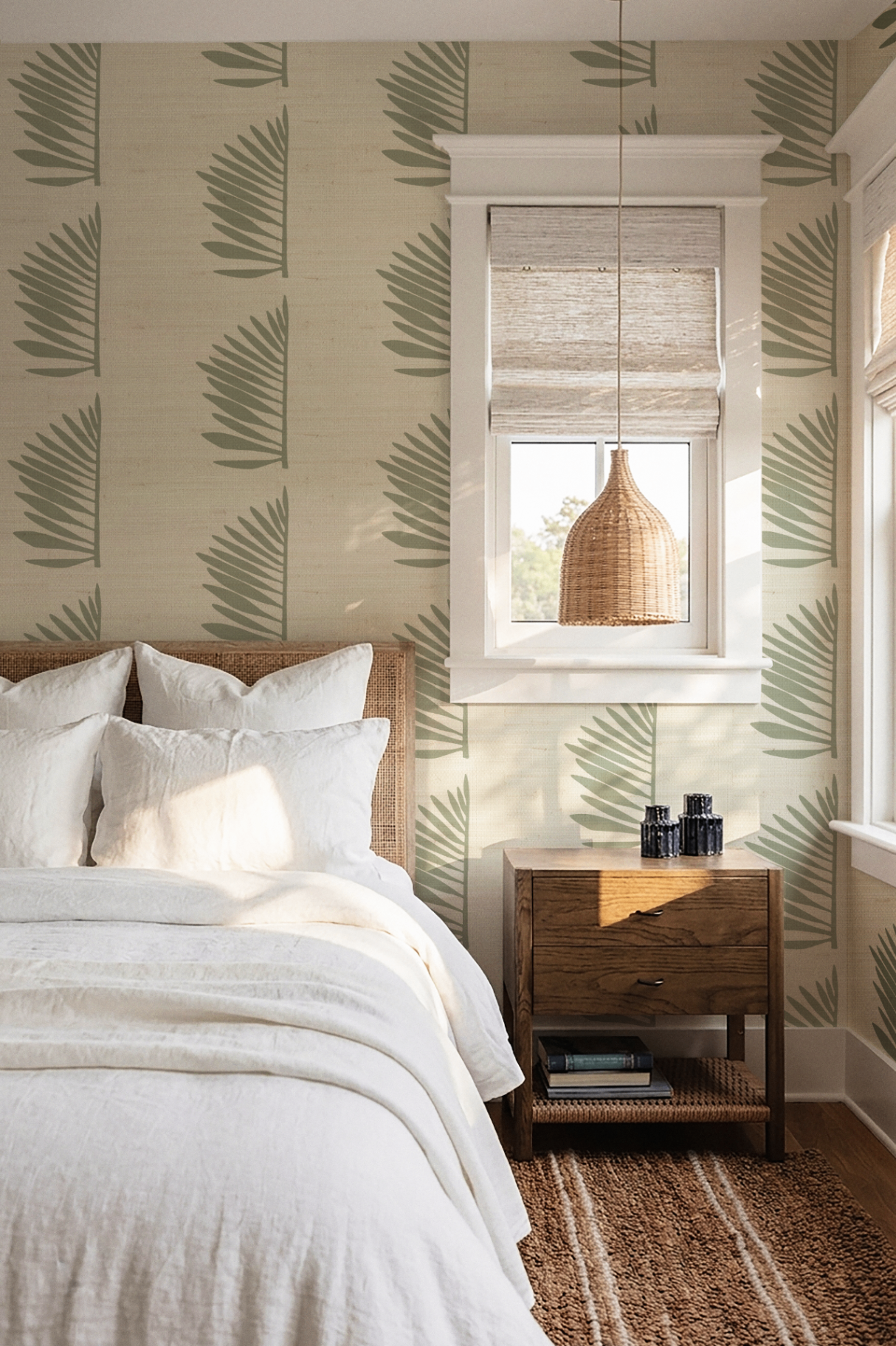
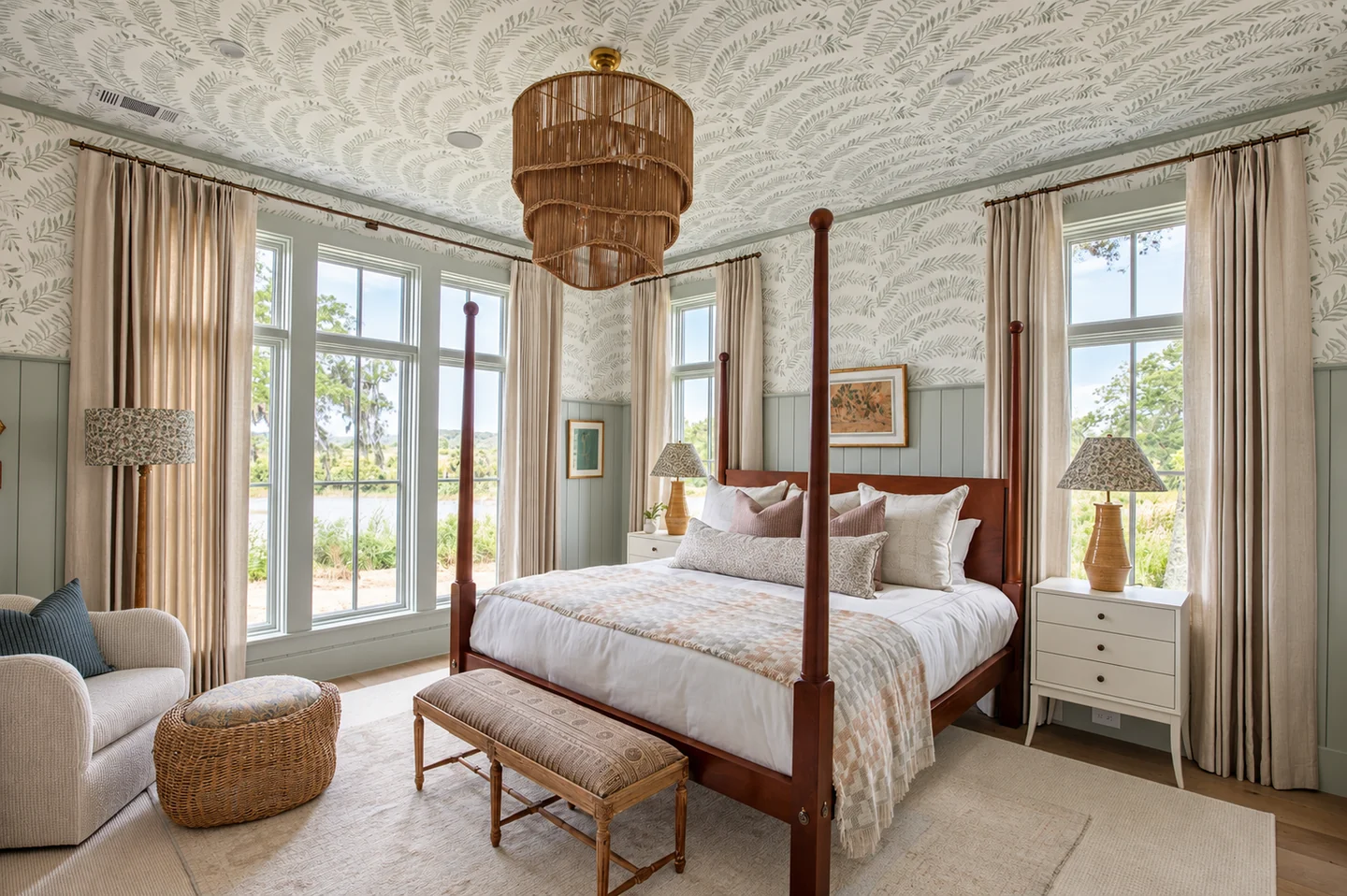
For Palmetto, I was less interested in drawing a perfect palm frond than in its structure. Long lines radiate from a central point, creating something that can read as botanical up close and almost architectural from across a room.
The oversized scale gives the pattern presence, while the simplified drawing keeps it from feeling overly decorative.
It became one of the earliest examples of a balance I still look for in pattern: enough information to recognize the source, but enough restraint to let it live comfortably within an interior.
Carolina Rice
Some patterns announce themselves. Others work more quietly.
Carolina Rice belongs to the second group.
Small linear forms are arranged into a close, cane-like rhythm inspired by the shape of rice grain and its connection to the Lowcountry landscape.
From a distance, the repeat can read almost as texture. Closer up, the individual marks become more apparent.
That shift in perception makes it particularly useful as a supporting pattern. It can sit alongside a larger floral or botanical without competing with it, while still bringing its own rhythm to the room.

Cobblestone
Charleston's streets are orderly without being perfect.
That irregularity became the starting point for Cobblestone.
The pattern uses a small repeating shape arranged with enough structure to feel balanced, but not so much that it becomes rigid.
I have always liked patterns that occupy that middle ground between geometric and organic. They create order without making a room feel overly composed.
Cobblestone was an early exploration of that idea, and it remains one of the easiest patterns in the collection to layer.

Sweetgrass
Sweetgrass began with another form closely tied to the Lowcountry: the coiled basketry created through generations of Gullah Geechee makers.
Rather than reproduce a particular basket pattern, I looked at the rhythm of the material and the repeated gesture of weaving.
Soft watercolor marks are staggered across the ground, creating a pattern that feels loose and painterly from a distance but reveals its repetition as you move closer.
It is less about illustrating an object than translating the movement and cadence of making into pattern.
Gardenia
There is something almost sculptural about a gardenia.
The petals are soft, but the overall shape is surprisingly strong.
For Gardenia, I simplified the bloom into broader forms, allowing the recognizable flower to become more graphic.
That abstraction keeps the floral from feeling overly sweet. It has enough softness to read as botanical, but enough structure to hold its own beside stripes, small-scale geometrics and quieter textures.
It was an early reminder that a floral does not need to be delicate to feel natural.
Magnolia
Magnolias are part of Charleston's visual landscape in a different way.
The bloom is large, layered and unmistakable.
With Magnolia, I wanted to keep some of that fullness rather than reduce the flower too far. The motif is more layered and painterly than several of the other patterns in the collection, allowing the petals and color to build across the repeat.
It gives the collection a larger botanical moment while still relating back to the quieter patterns around it.
Scale is what makes that relationship work.
A collection becomes more useful when every pattern is not trying to do the same thing.
The Beginning of a Point of View
When I look back at the Charleston Collection now, I see more than my first group of fabrics and wallcoverings.
I can see the beginning of how I learned to approach pattern.
Start with something real.
A plant. A material. A street. A landscape. A familiar shape.
Then look again.
Remove what is unnecessary. Change the scale. Pay attention to the spaces between motifs. Think about how the repeat will behave across a curtain, a chair, a wall or a small pillow.
The goal is not to recreate the original reference. It is to understand what made it interesting in the first place.
Charleston continues to influence the work, although not always literally. Its gardens, architecture, landscape and materials have become part of the visual vocabulary of the studio.
The collections have changed since 2018. The way I draw has changed too.
But that idea of translating a sense of place into pattern has stayed remarkably consistent.
The Charleston Collection was where it began.
Featured in This Story
Explore the six patterns of the Charleston Collection: Palmetto, Carolina Rice, Cobblestone, Sweetgrass, Gardenia and Magnolia.


Order Swatches
Seeing a pattern at full scale begins with seeing the material itself.
Cut swatches are available through the studio for reviewing color, ground, texture and scale before specifying a project.
From The Common Thread
Charleston Collection
A Study in Lowcountry Pattern: The 2024 Southern Living Idea House
A KIAWAH RIVER HOLIDAY
A Kiawah River Holiday: Nectar Fabric in the Southern Living Idea House
Charleston Collection