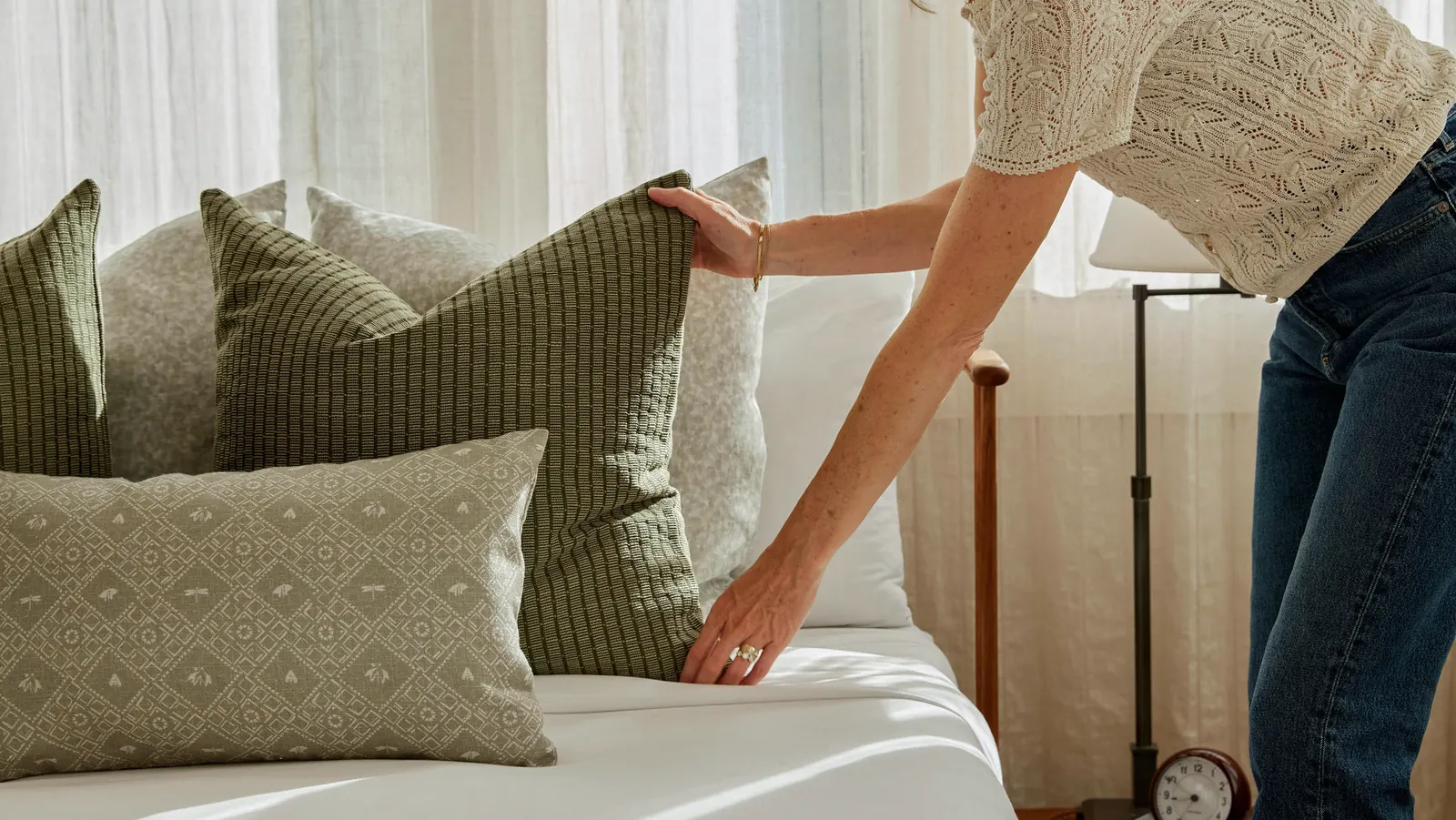
The Art of Pattern Mixing
A layered room does not depend on fabrics that match. It comes from changing scale, repeating color selectively, and allowing texture to separate one pattern from the next.
There is a point when combining pattern stops being about finding fabrics that match and becomes much more about how the patterns relate to one another.
Scale is usually part of it. So is color. But density, movement and the amount of open ground around a motif matter just as much.
The most interesting rooms often include patterns that look quite different when viewed individually. One may be graphic while another is organic. One may carry the room while another reads almost as texture.
What connects them does not need to be obvious.
A color may repeat. A natural ground may carry through. Two patterns may share a similar looseness in the drawing while changing scale completely.
The goal is not to make every textile agree. It is to give each one a different role.
Start With Scale
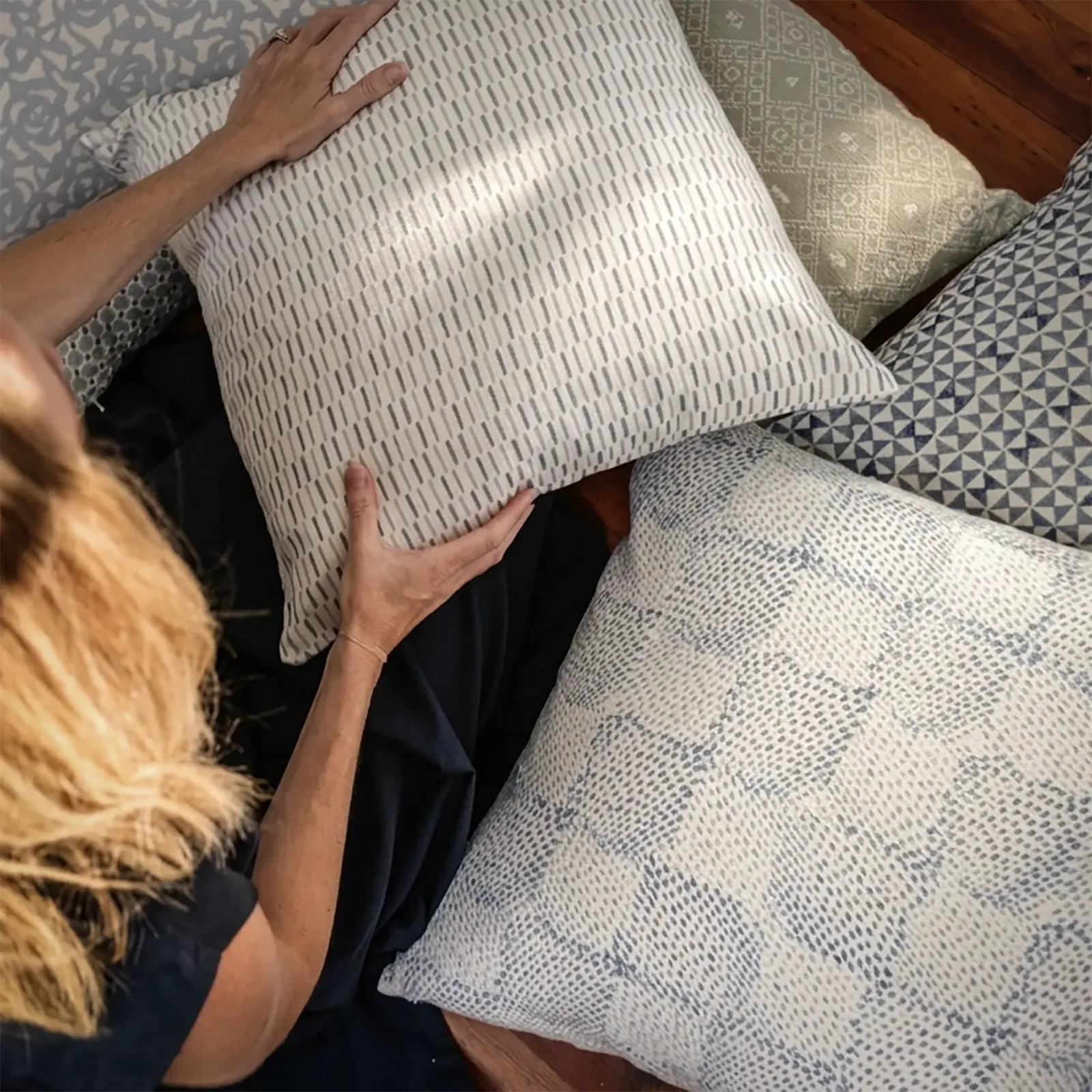
Scale is usually the first thing I notice when patterns are placed together.
If every repeat is similar in size and density, the textiles can begin to compete. Changing the scale gives each pattern more room to establish its own role.
A smaller repeat can sit comfortably beside a fuller botanical because the eye reads them differently. One establishes movement while the other begins to behave almost like texture.
That contrast is often more useful than finding two patterns that were designed to coordinate.
Let the Quieter Pattern Act Like Texture
Not every pattern needs to announce itself from across the room.
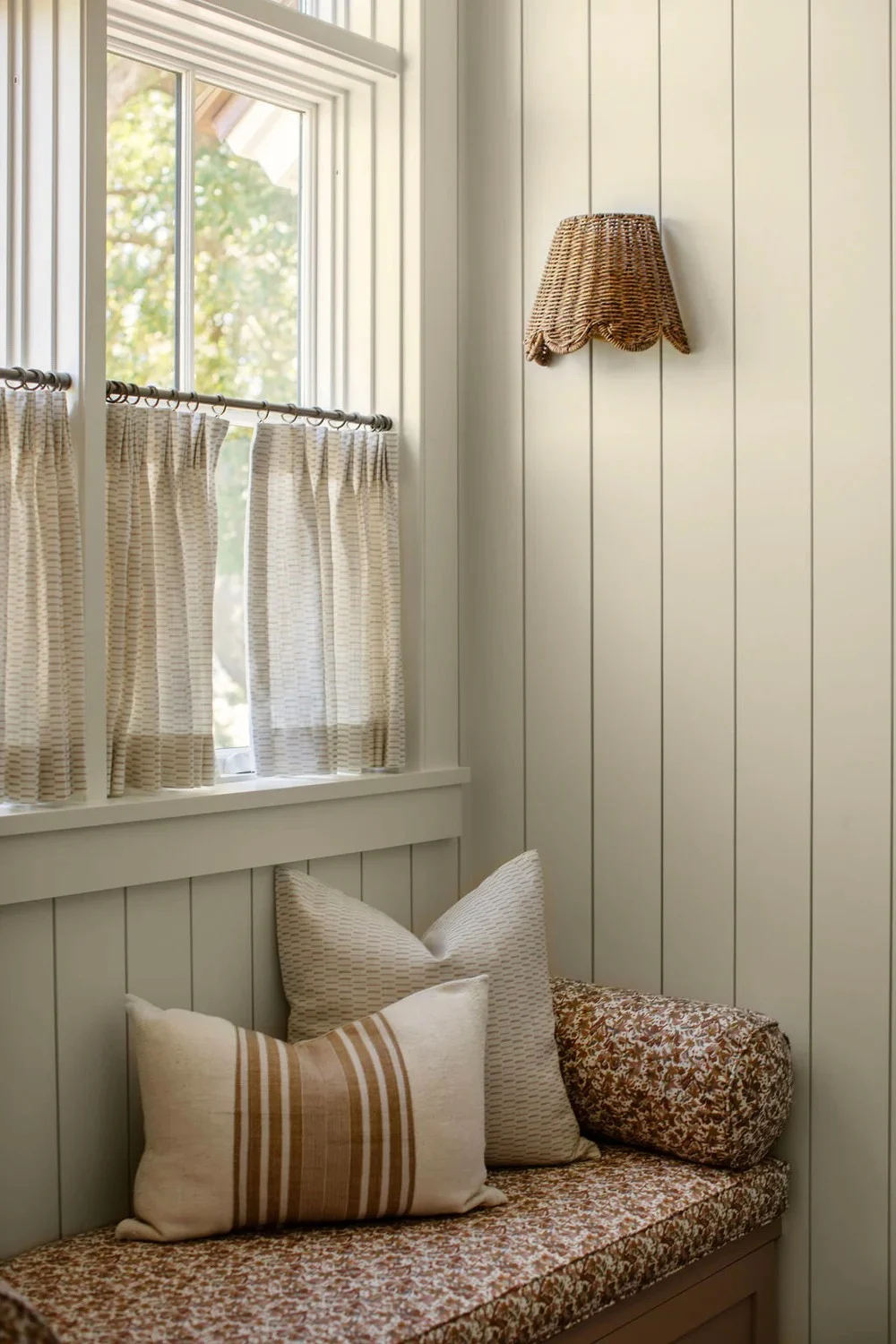
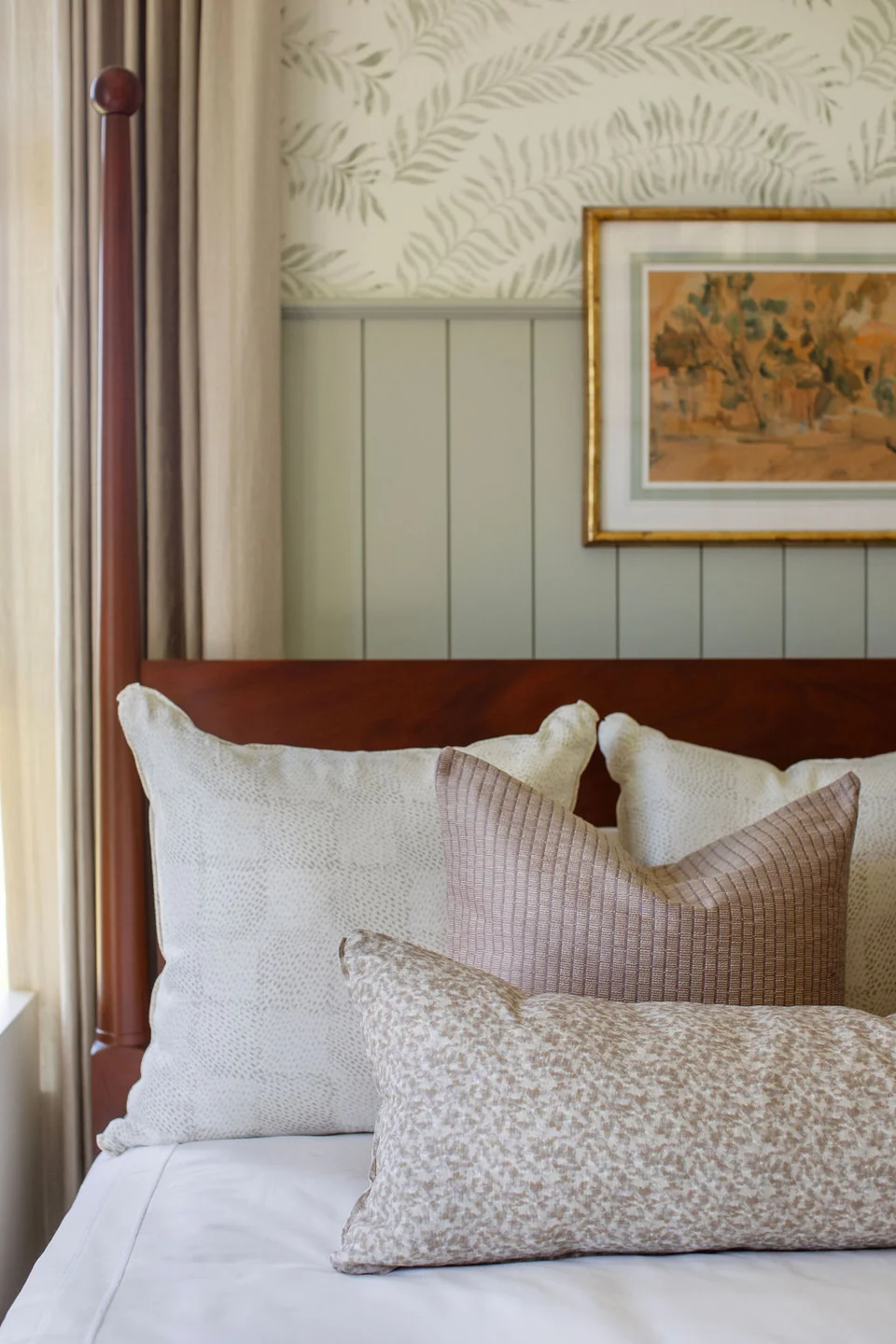
Some of the most useful layers sit somewhere between pattern and texture. A small repeat, woven surface or restrained mark may become more apparent as you move closer, while from a distance it simply adds rhythm.
That quieter layer gives stronger motifs somewhere to rest. In a room with patterned pillows, artwork or a more expressive textile, a subtle drapery or textured upholstery can help separate those elements rather than asking another pattern to compete with them.
This is often what makes a layered room feel collected rather than coordinated. Some textiles carry the pattern. Others simply give it room to be seen.
Repeat a Relationship, Not a Motif
Patterns do not need to repeat the same shape in order to belong together.
Sometimes the relationship comes from the way they are drawn.
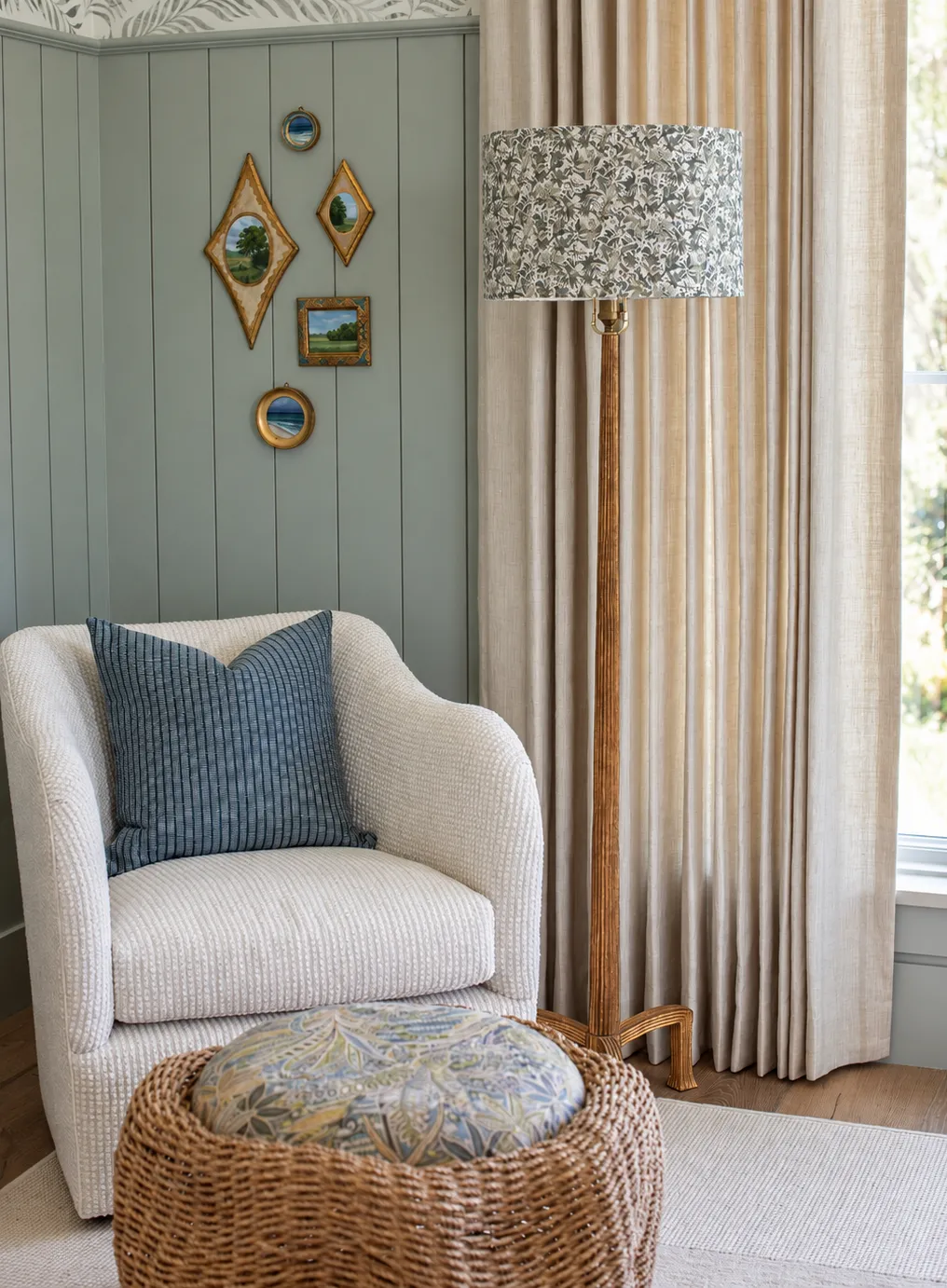
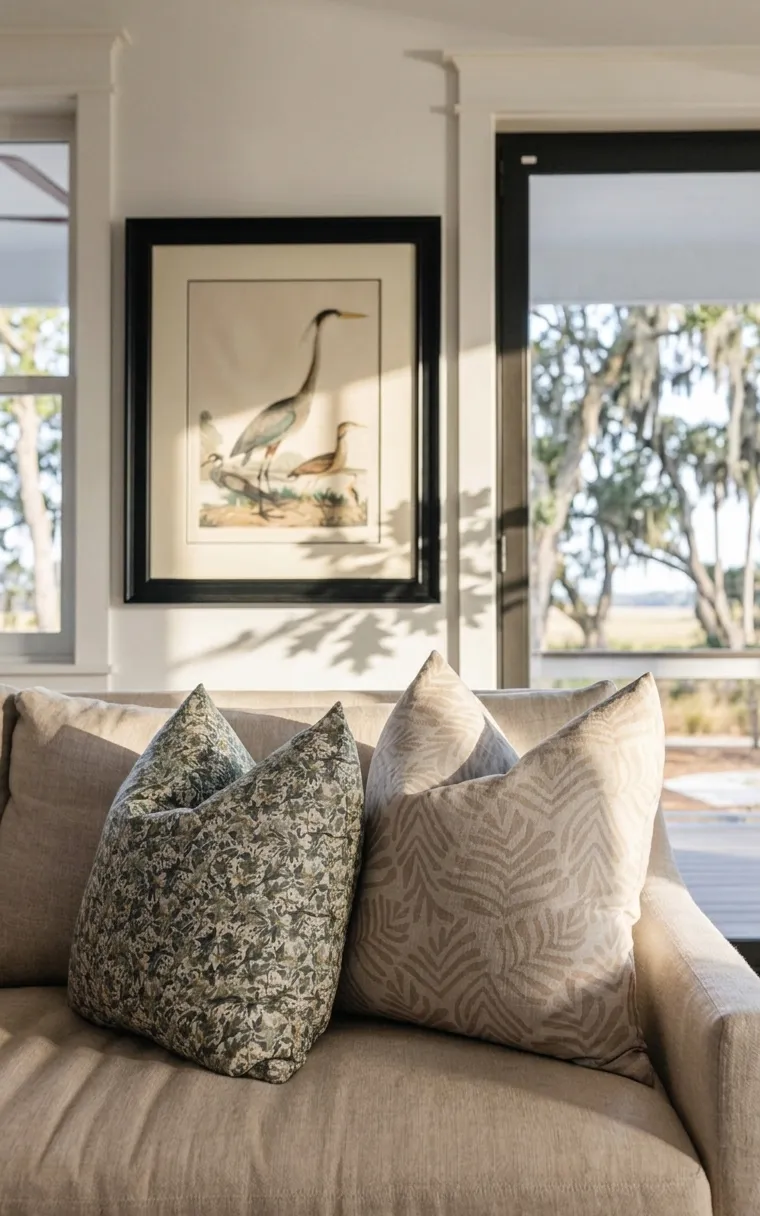
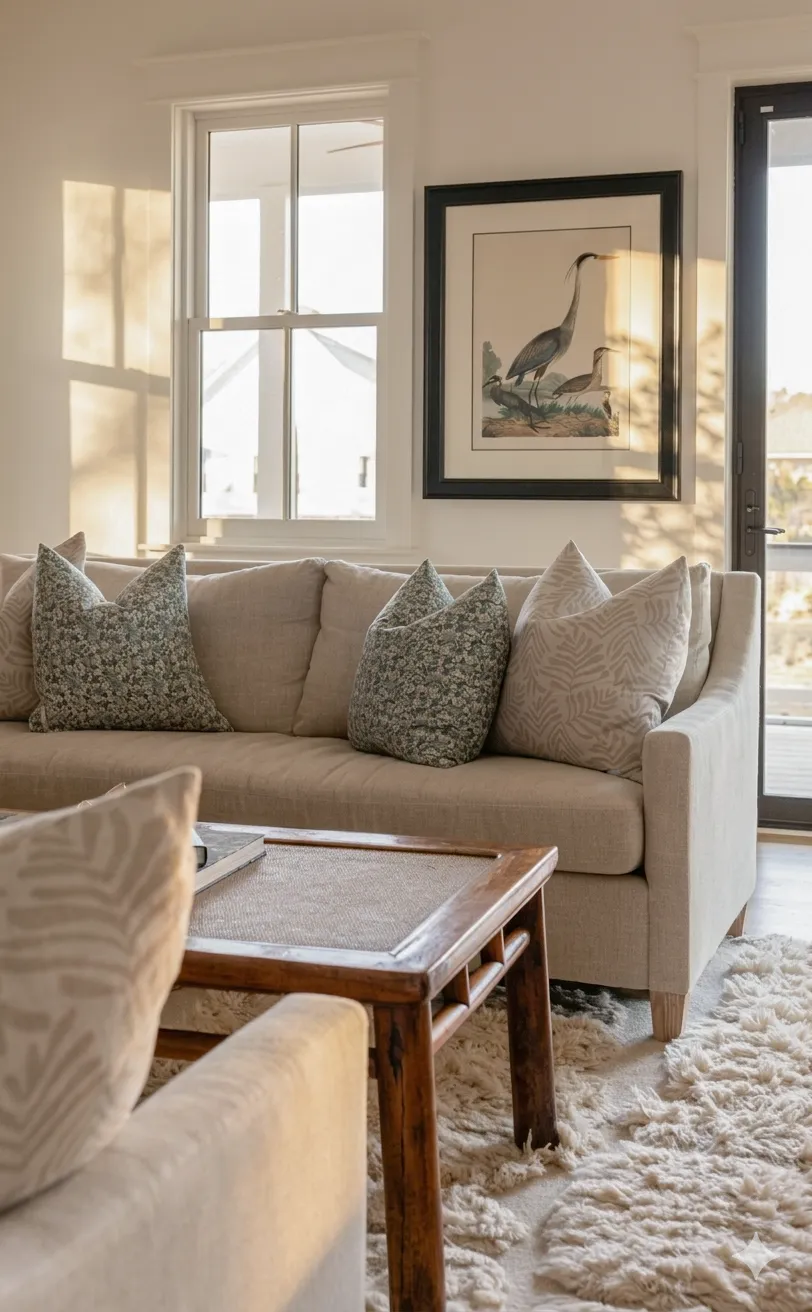
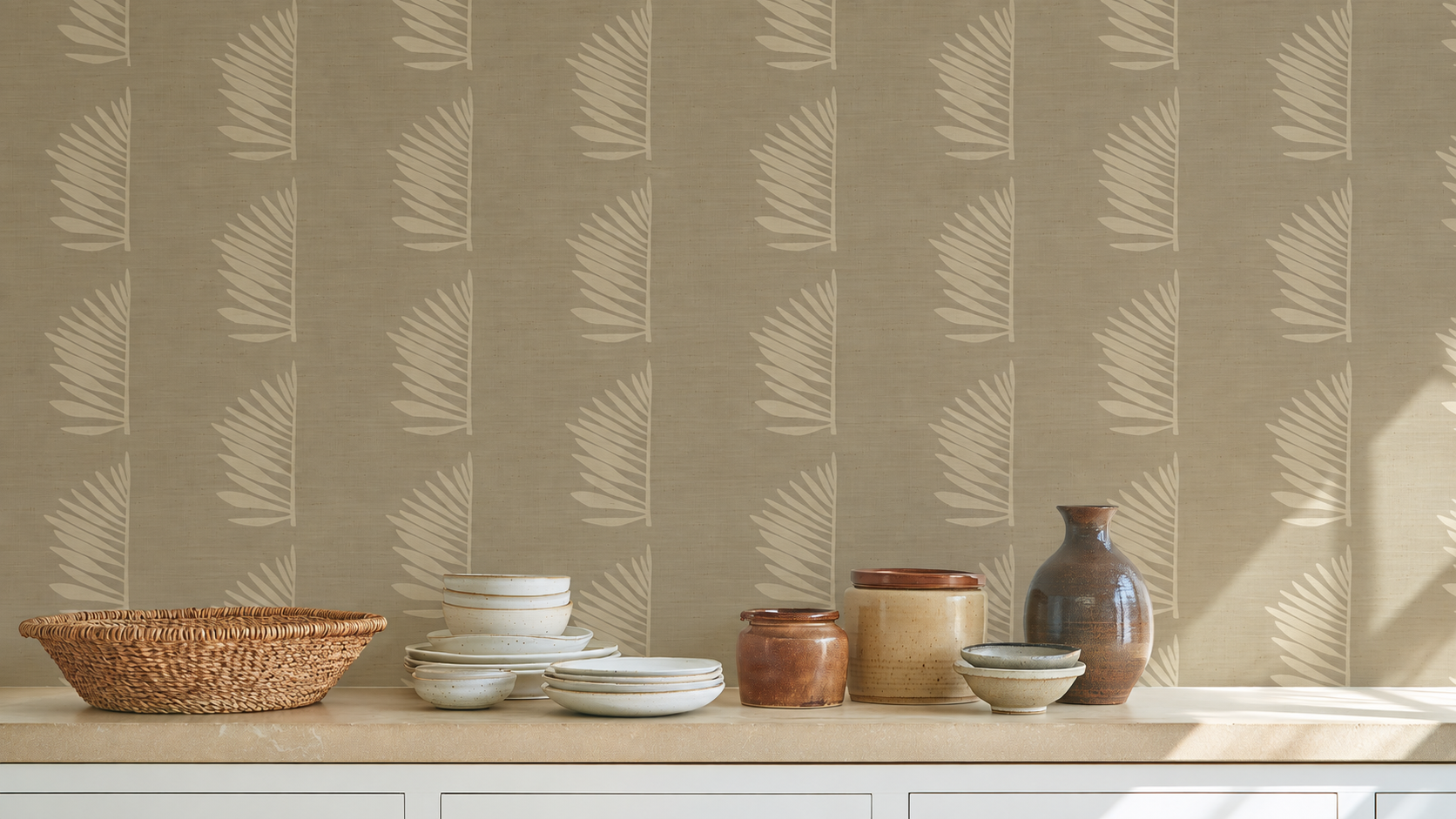
Eden in Emerald and Frond in Truffle approach botanical pattern very differently. Eden is dense and gathered, with flowers and foliage moving across the surface. Frond is larger and more open, reducing the fern leaf into a simplified graphic form.
Placed together, one does not imitate the other.
What they share is subtler: natural references, an imperfect drawn quality and enough difference in scale for each pattern to remain distinct.
This is the kind of pairing I tend to prefer. The connection is visible, but it does not feel overly arranged.
Leave Some Space
Pattern needs somewhere to end. If every surface carries a repeat, the distinctions between those patterns begin to disappear.
A plain linen, natural wall, woven shade or solid upholstery can be just as important to a pattern scheme as the printed fabrics themselves. That space allows a larger motif to remain legible and gives a smaller repeat a chance to read almost as texture.
It is also why I rarely begin a room by trying to find three fabrics that coordinate perfectly. I would rather begin with one pattern I care about and build outward, changing scale, allowing one color or material to carry through, and leaving enough room for each textile to remain distinct.
Building the Layered Room
The strongest pattern combinations tend to share just enough. It might be a color, a natural ground, a proportion or simply a similar looseness in the drawing. Everything else can change.
That difference is what gives a room depth. A small repeat beside a fuller botanical, a structured line beside something organic, or two motifs drawn from nature at completely different scales can feel connected without appearing coordinated.
The objective is not to make the patterns match. It is to give them a reason to belong in the same room.
Featured in This Story
Sweetgrass, Sandbar, Eden and Frond show four different ways pattern can contribute to a layered room, from a small repeated mark to a fuller botanical and a larger, more open motif.


Order Swatches
Pattern relationships are easiest to understand in person. Order swatches to compare scale, color, ground and density together before specifying a room.
From The Common Thread
Pattern Inspiration
A Different Kind of Warmth: Decorating with Grasscloth
Charleston Collection
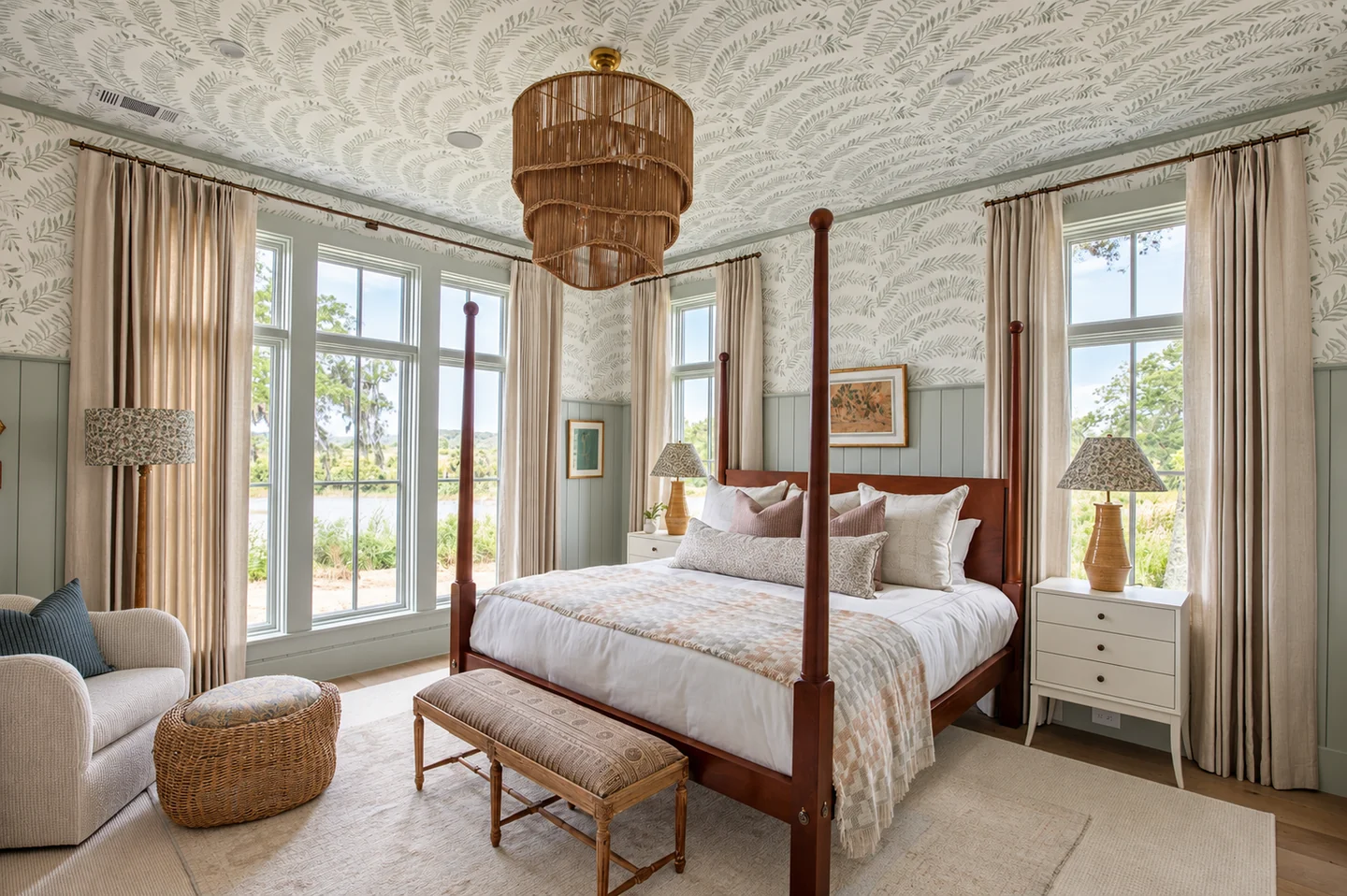
A Study in Lowcountry Pattern: The 2024 Southern Living Idea House
Coastal Living