
Why Small-Scale Pattern Matters
The quieter repeats in a room are often the ones doing the most work. Small-scale pattern brings rhythm, connects larger motifs and adds texture without asking to become the focal point.
Not every pattern in a room needs to be the one you notice first.
Some of the most useful textiles are the ones that reveal themselves gradually. From across a room, they may read almost as texture. Move closer and the repeat begins to appear.
That quality makes small-scale pattern especially useful in a layered interior.
It can sit beside a larger botanical without competing with it. It can cover a generous surface without becoming overwhelming. And it can introduce just enough rhythm to keep a quieter room from feeling flat.
Small pattern rarely carries the entire room.
More often, it is what holds the other pieces together.

A Pattern That Reads Like Texture
One of the qualities I like most in a quieter pattern is the way it changes with distance.
Up close, you notice the individual marks and the movement within the repeat. From farther away, those details begin to settle into the surface, allowing the fabric to read almost like texture.
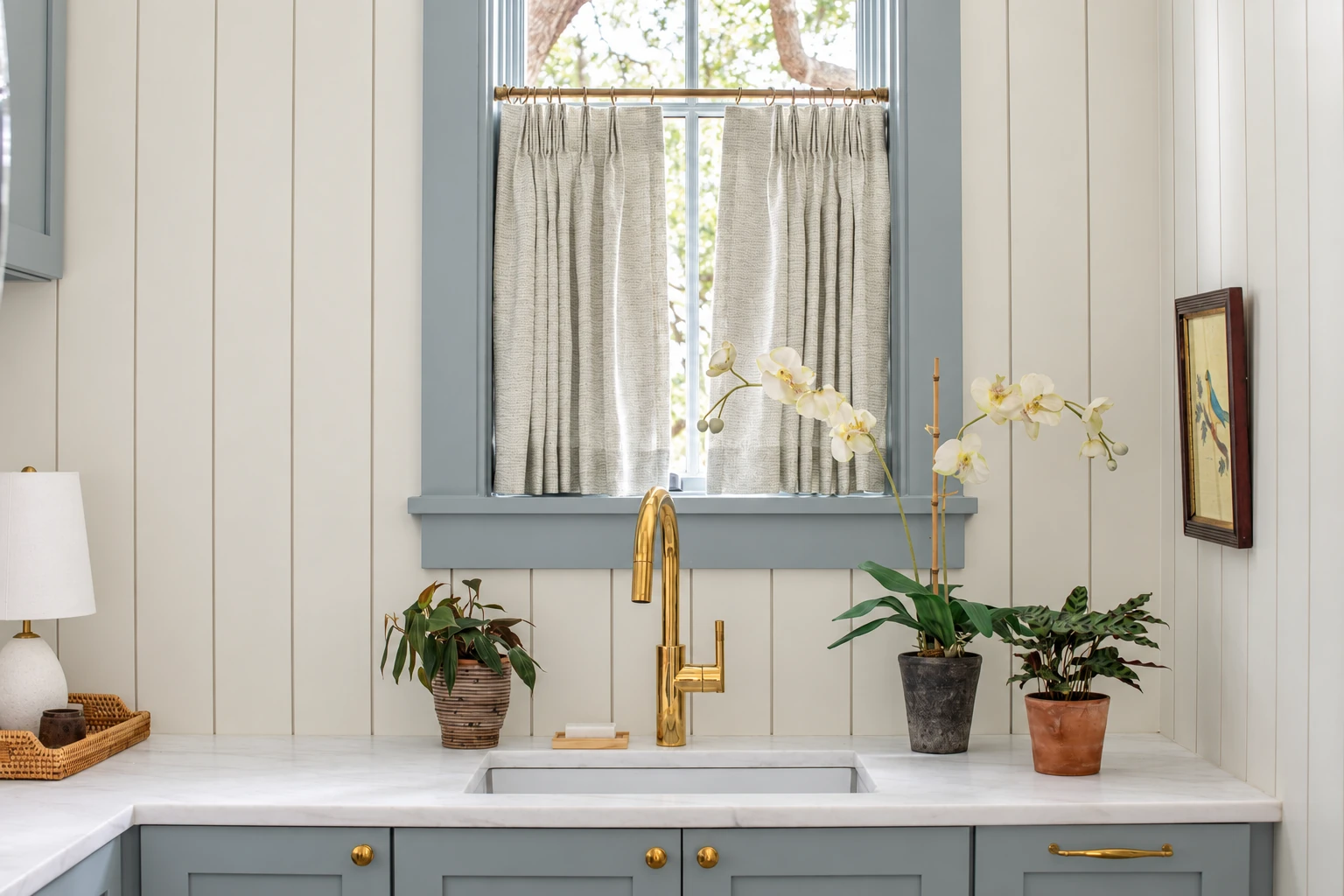
Harbor in Celadon works especially well in this way.
The pattern has a fluid, organic rhythm, but the scale and softer color keep it from feeling overly pronounced. Used as café curtains, it brings just enough movement to the window while allowing the architecture, light and surrounding materials to remain part of the composition.
That balance is what makes a quieter pattern so useful. It can add character and depth without becoming the first thing you notice.
Small Pattern Can Give a Room Structure
Small-scale pattern does not have to disappear completely.
Sometimes its role is to introduce structure.
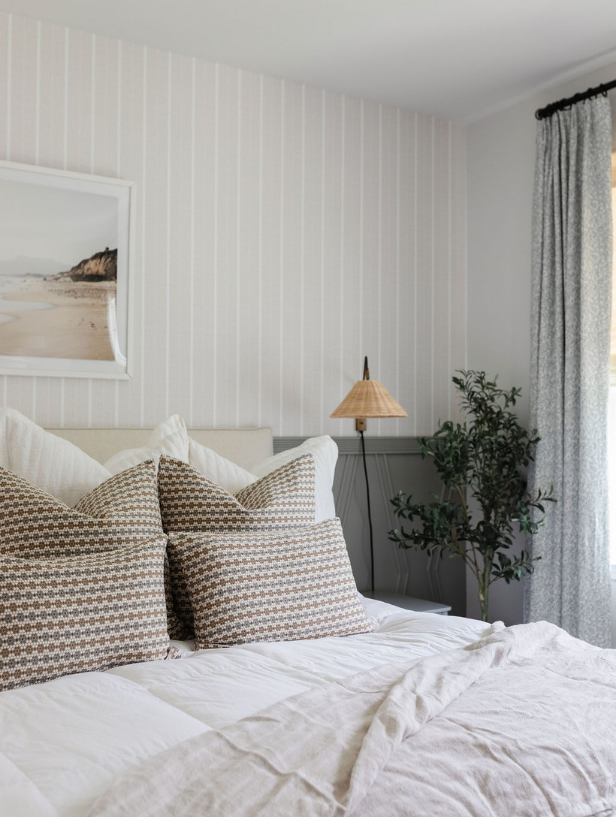
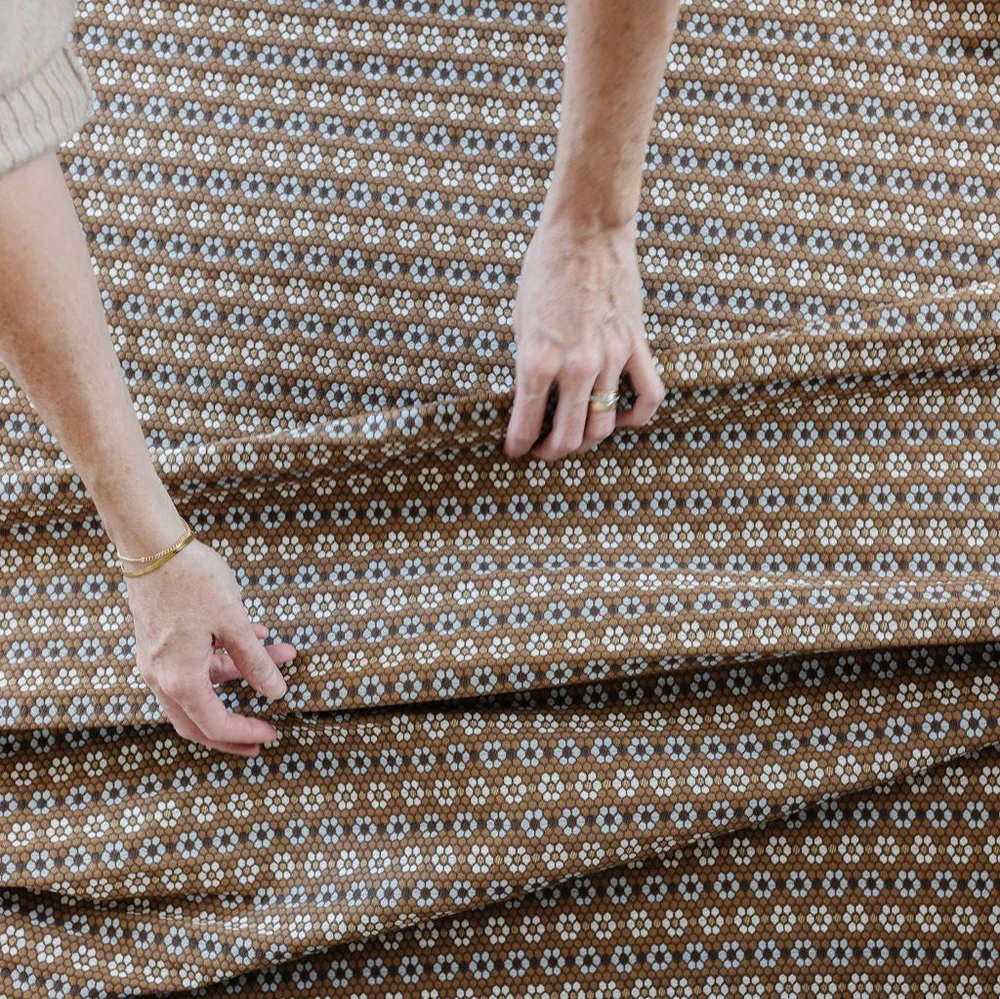
Nectar works this way differently from Carolina Rice. Its woven motif is geometric, taking its structure from the honeycomb. At roughly 1.75 inches square, the repeat remains small, but the geometry gives the surface a clear rhythm.
This is where small-scale pattern becomes particularly useful. Color, weave and repeat can all contribute to the room without introducing another large motif.
On a chair, bench or pillow, that combination can become a bridge between a larger printed fabric and the quieter solids around it.
Quiet Does Not Have to Mean Perfect
Small pattern becomes even more interesting when the marks themselves are irregular.
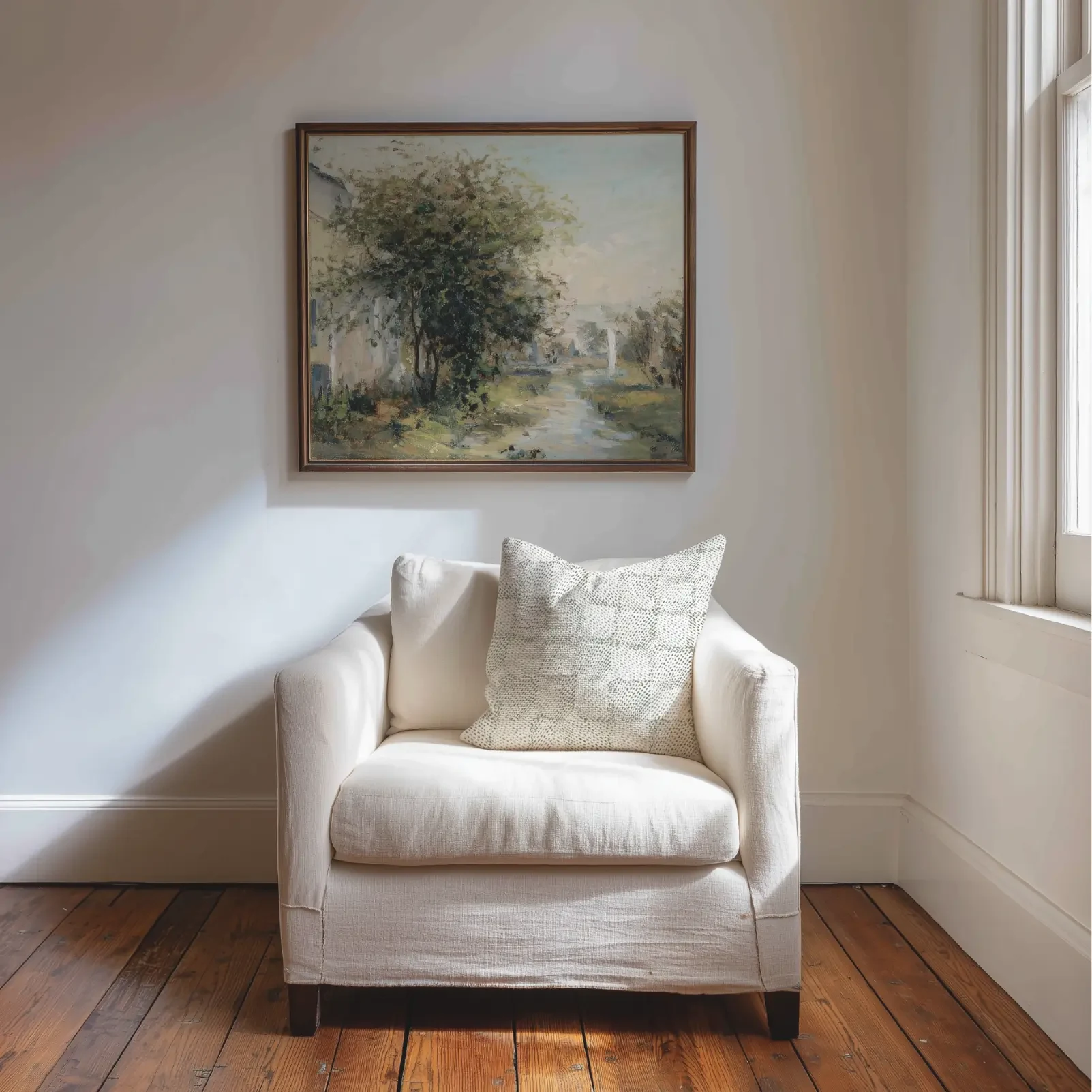
Speckled Check begins with the idea of a traditional check, but the structure is formed from painted dashes rather than perfectly drawn lines.
The individual marks are small. Their variation keeps the pattern from feeling rigid.
This distinction matters.
A small repeat can bring order to a room, but if every line is too precise it can begin to feel mechanical. A hand-drawn mark softens that structure.
Speckled Check has a larger overall repeat than Carolina Rice or Nectar, but the individual painted marks remain small. That allows the surface to still read quietly from a distance while revealing more of the drawing up close.
The Quiet Layer Between Patterns
Not every quieter layer needs to be printed.
A tweed, basketweave, velvet or small woven repeat can serve the same purpose.
These surfaces give the eye somewhere to rest while still adding depth. In a room with a larger floral or botanical, a quieter woven fabric can repeat one of the colors already present without introducing another strong motif.
This is an important part of layering pattern well.
The room does not need fewer textiles.
It needs textiles doing different jobs.
A larger motif can carry movement. A small repeat can add rhythm. A woven texture can bring depth. A solid can give everything else somewhere to end.
Where Small Pattern Works Best
There is no single application reserved for small-scale pattern.
I like it on a Roman shade because the repeat remains visible even when the shade is raised. On drapery, it can cover a large area without becoming overly decorative. On upholstery, a compact repeat can follow the shape of the furniture without losing its structure.
It is also one of the easiest ways to bring pattern into a room that already has a stronger statement elsewhere.
The important thing is not simply that the repeat is small.
It is what the smaller scale allows the fabric to do.
Building the Layered Room
The patterns that receive the least attention are often the ones making everything else work.
A small repeat can connect colors, soften the transition between larger motifs and give a surface enough movement to keep it from feeling flat.
It does not need to be memorable on its own.
Its value is often in the relationship it creates with everything around it.
That is what makes small-scale pattern such an important part of a layered room.
Featured in This Story
Harbor, Nectar and Speckled Check show three different approaches to quieter pattern: a fluid organic print, a structured woven motif and an irregular painted check.


Order Swatches
Small-scale pattern is especially useful to review in person. Order swatches to compare repeat, texture and color at the distance the fabric will actually be seen in the room.
From The Common Thread

Pattern Inspiration
The Art of Pattern Mixing
Pattern Inspiration
A Different Kind of Warmth: Decorating with Grasscloth
THE COMPANION COLLECTION